
Inkberry
Ilex glabra (L.) A. Gray
Description
Growing requirements
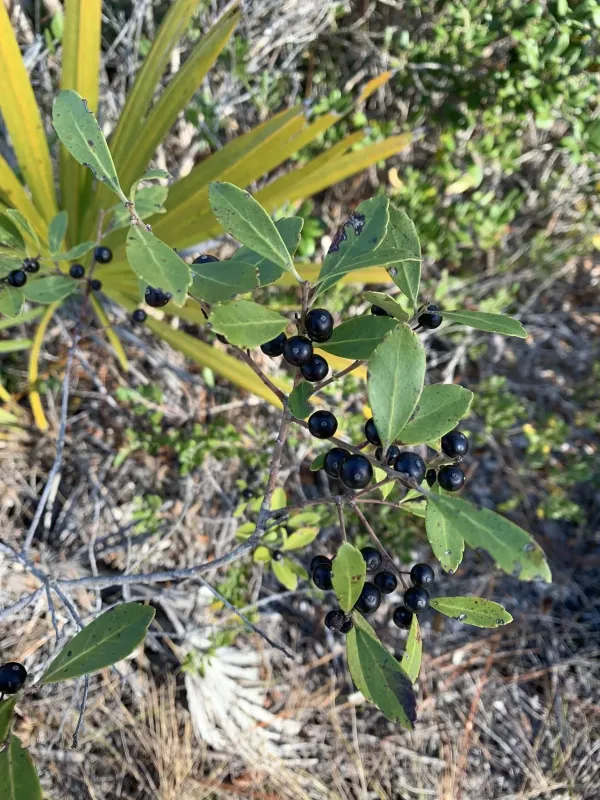
Inkberry (Ilex glabra) is a member of the Aquifoliaceae family and is widely recognized as a native evergreen shrub of the eastern and south-central United States. Unlike many other holly species, it is characterized by spineless, glossy, dark green leaves.
This species thrives in moist to wet, acidic soils and is naturally found in pine barrens and swamps. It performs best in soils with a pH range of 4.5 to 6.0 and is highly sensitive to alkaline conditions, which often induce chlorosis in the foliage.
In terms of light, Inkberry shows good adaptability, flourishing in full sun to partial shade. When planted in full sun, however, it requires consistent soil moisture to maintain its lush appearance and prevent stress during high-temperature periods.
The plant is highly regarded for its adaptability in landscaping. It serves as an excellent alternative to boxwood for hedge forming and border plantings. Its compact, upright growth habit makes it suitable for both formal and informal garden designs.
Botanically, it produces small, inconspicuous flowers that attract pollinators, followed by black berry-like drupes in late autumn. These berries provide a food source for local bird populations, adding ecological value to the landscape.
Main diseases and pests
The most significant pathological threats to Ilex glabra include various leaf spot diseases that thrive when the foliage remains wet for extended periods, especially in poorly ventilated environments.
Pest issues often involve scale insects, such as the holly scale or wax scale. These pests can cause significant damage by sucking plant fluids and promoting the growth of sooty mold.
Root rot, particularly Phytophthora, can become an issue if the planting site lacks proper drainage, leading to waterlogged soil conditions that suffocate the root system.
Effective management includes maintaining a proper planting distance to ensure good air circulation and pruning out diseased wood to reduce inoculum sources.
In case of severe infestations, horticultural oils or systemic insecticides applied during the crawler stage of scales are generally effective in managing the pest populations.