
Ilex integra
Ilex integra Thunb.
Description
Growing requirements
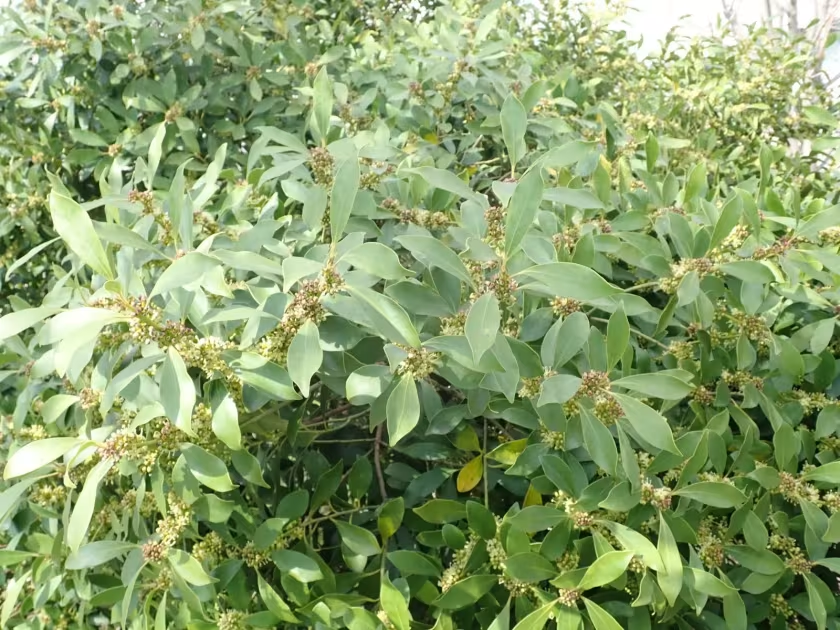
Ilex integra, commonly known as the Whole-leaf Holly, is an evergreen tree or shrub belonging to the Aquifoliaceae family. Native to Eastern Asia, specifically Japan and the Korean Peninsula, it is highly valued for its elegant, dark green glossy foliage and clean appearance.
The plant thrives in environments that mimic its natural habitat, requiring partial shade to full sun with protection from harsh, drying winds. It prefers a humid climate and performs best in locations where it can receive consistent moisture throughout the growing season.
It demands well-draining, fertile soil that is slightly acidic. If the soil is heavy or prone to waterlogging, it is essential to amend it with organic matter or create raised beds to ensure adequate aeration for the sensitive root system.
Cultivation practices involve regular but controlled irrigation to prevent the soil from drying out completely. This is particularly critical for young, newly established shrubs that have not yet developed deep, extensive root networks.
Due to its slow growth rate and excellent tolerance to shearing, Ilex integra is a popular choice for topiary and formal hedge construction. Maintenance pruning is typically performed in late winter or early spring before the onset of new vegetative growth.
Main diseases and pests
The plant is susceptible to various fungal pathogens, including leaf spot diseases and root rot, which are primarily facilitated by poor drainage and excessive soil moisture.
Common insect pests include scale insects and whiteflies, which may colonize the underside of the leaves and stems, leading to stunted growth and yellowing of the foliage.
Spider mites can become a significant issue during hot and dry summer months, requiring vigilant monitoring and potential intervention with horticultural oils or insecticidal soaps.
Proper sanitation, including the removal and disposal of infected plant material, is essential to minimize the risk of disease spread within the garden or nursery setting.
Maintaining vigorous health through correct fertilization and avoiding drought stress is the best way to ensure the plant's natural resistance to common infestations and infections.