
Ilex dumosa
Ilex dumosa Reissek var. dumosa
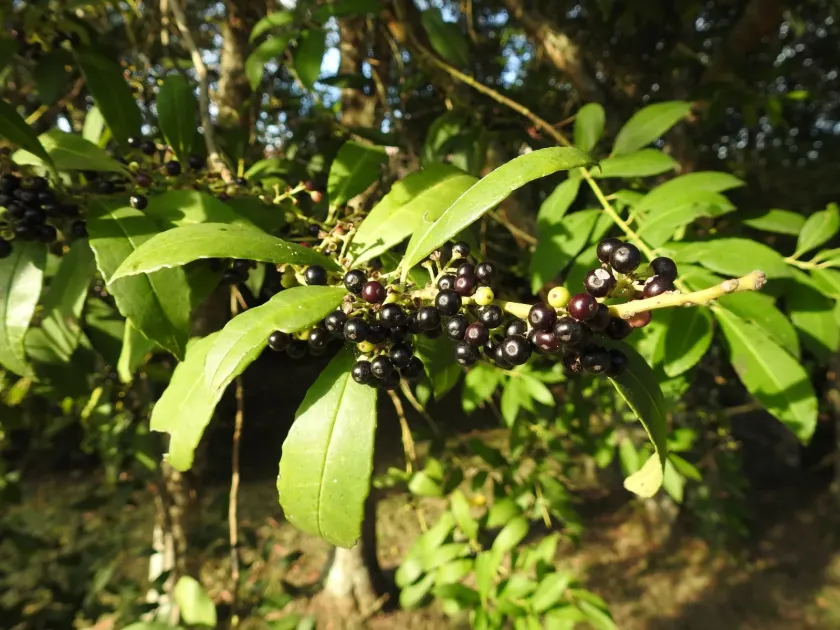
Description
Growing requirements
Ilex dumosa belongs to the Aquifoliaceae family. This evergreen shrub or small tree is native to the subtropical forests of South America, primarily found in Brazil, Argentina, and Paraguay. It thrives in regions characterized by consistent moisture and moderate temperatures.
The plant prefers a humid climate and does not tolerate prolonged drought, which restricts its viable cultivation area to specific subtropical zones. High air humidity is essential for the healthy development of its foliage, which is the primary economic harvest.
Regarding soil, Ilex dumosa requires well-drained, acidic to slightly acidic soils rich in organic matter. Waterlogging is detrimental to the root system, making proper soil drainage a prerequisite for plantation establishment in heavy or clay-based soils.
Botanically, Ilex dumosa is distinguished from its relative, Ilex paraguariensis, by having a lower caffeine content and a different chemical profile, making it a valuable alternative for specialty beverages. Its leaves are leathery, elliptical, and serrated, characteristic of the genus.
In commercial cultivation, young plants require partial shade to protect them from direct, intense sunlight. Agronomic practices often involve the use of organic fertilizers to boost leaf biomass production, ensuring consistent yields throughout the productive life of the shrub.
Main diseases and pests
The most significant threats to Ilex dumosa are fungal root pathogens, which often develop due to poor soil aeration and excessive moisture. Regular monitoring and irrigation management are essential strategies to prevent root rot and ensure plant longevity.
Pest management focuses primarily on leaf-eating insects and specific mite species that target tender new shoots. In the event of an infestation, integrated pest management (IPM) strategies, including biological controls or short-residual systemic insecticides, are recommended.
Harvesting
The economic value of Ilex dumosa lies in its leaves, which are processed to create traditional herbal beverages with a milder profile than standard mate. Harvesting is performed either manually or mechanically, depending on the scale and density of the plantation.
Primary processing involves immediate drying or thermal treatment to halt enzymatic activity, which preserves the plant's essential oils and antioxidants. After the initial drying phase, the leaves are milled into specific fractions for packaging and retail.
Yields are highly dependent on plant age and spacing. Typically, commercial plantations reach maturity and provide a sustainable, profitable harvest volume between three to five years after initial field planting.
Quality control is paramount during the drying process. Advanced protocols recommend precise temperature regulation to ensure that the delicate polyphenols and phytochemicals characteristic of Ilex dumosa are retained for the final consumer product.
Beyond beverage production, the species is occasionally utilized in ornamental landscape design. Its evergreen nature and high tolerance for pruning make it an excellent choice for dense hedge installations in appropriate climate zones.