
Ilex dumosa
Ilex dumosa Reissek
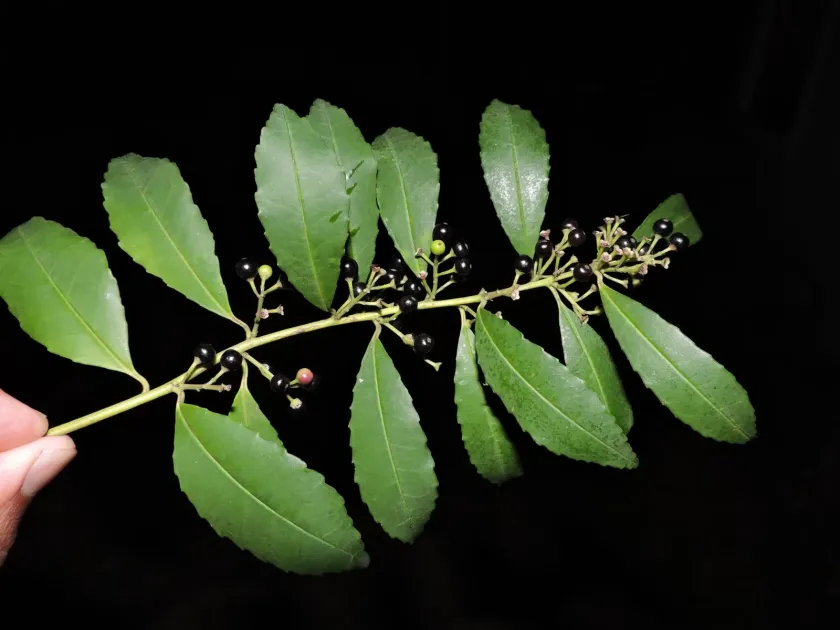
Description
Sowing dates
Propagation of Ilex dumosa is primarily carried out through seeds or vegetative methods using semi-hardwood cuttings. In commercial horticulture, cuttings are preferred as they preserve the varietal characteristics of the parent plant and accelerate the production cycle.
Seeds of this species exhibit a long dormancy period, requiring mandatory cold stratification for several months to successfully germinate. Sowing in prepared substrates is typically conducted in the spring, once the threat of night frosts has passed.
The optimal planting distance for setting up plantations ranges from 1.5 to 2 meters. This density ensures adequate air circulation and facilitates maintenance tasks, as well as the mechanization of the harvesting process.
The soil must be thoroughly cleared of weeds and enriched with organic matter before planting. Young seedlings require shade during their first years of life to prevent sunscald and excessive moisture loss.
Continuous monitoring of the root system allows for immediate adjustments in irrigation and the application of mineral fertilizers, which are essential for stimulating the vegetative growth of young shoots.
Growing requirements
Ilex dumosa, belonging to the Aquifoliaceae family, is a close relative of the well-known yerba mate. It is an evergreen shrub native to the subtropical regions of South America, primarily found in Brazil and Argentina.
The plant has high requirements regarding soil and atmospheric humidity, preferring fertile, well-drained soils with an acidic to slightly acidic pH. Waterlogging is detrimental to holly, as it often leads to root rot.
Climatically, the crop thrives in regions with mild winters and moderately warm summers. While the species possesses some resilience to temperature fluctuations, prolonged extreme cold can cause significant damage to the foliage.
Good agricultural practice includes regular cultivation of the soil around the base and mulching to retain moisture. Mulch also serves to suppress competing weeds that would otherwise rob the shrub of vital nutrients.
During active growth periods, the plant requires balanced nutrition with an emphasis on nitrogen-based fertilizers, which encourage the development of the leaf mass intended for agricultural processing.
Yield
The commercial utility of Ilex dumosa is primarily linked to the production of beverages that resemble traditional mate tea but offer a lower caffeine content and a distinct flavor profile.
Leaves and young stems serve as the primary raw material, which undergo drying and specialized processing. Economic efficiency is directly dependent on regular pruning of the bushes, which stimulates the growth of new branches.
Crop yields usually stabilize by the 3rd or 4th year after transplantation. When standard agronomic guidelines are followed, a plantation can provide a consistent increase in biomass for many years without the need for replanting.
The final product quality is determined by the drying technology and the degree of leaf fermentation. Modern agricultural enterprises strive to mechanize harvesting, which significantly reduces the production cost in the global market.
A secondary application of this crop is in landscape design, as the dense, evergreen canopy of the holly bush is highly ornamental and responds well to regular formative pruning.
Main diseases and pests
Typical diseases affecting Ilex dumosa include various leaf spot pathogens that thrive in high-humidity conditions. Infestations significantly reduce the commercial value and aesthetic appearance of the harvest.
Pests such as scale insects and spider mites can cause severe damage during dry periods. They pierce the leaves to feed on cellular sap, causing yellowing, curling, and premature defoliation.
To control pest populations, farmers use a combination of biological control methods and moderate chemical applications, ensuring strict adherence to regional ecological safety standards.
Infection prevention involves timely sanitary pruning of affected branches, improving plantation ventilation, and preventing over-irrigation, which remains a key factor in maintaining overall plant health.
In cases of root rot, immediate soil disinfection and a review of the irrigation system are recommended, as recovery from deep root damage is extremely slow and unpredictable.
Harvesting
Harvesting is preferably performed during dry weather to prevent the development of fungal processes during the transportation and initial processing of the green leaf mass.
The harvesting technology involves careful pruning of young shoots and leaves. It is vital not to damage the main skeletal branches of the bush, ensuring the plant recovers fully for the next production season.
After collection, the raw material undergoes a high-temperature fixation stage to halt enzymatic activity in the leaves, preserving the natural color and beneficial micronutrients of the product.
Subsequently, the material is dried in well-ventilated facilities with controlled humidity levels to prevent the formation of mold or the absorption of unwanted odors.
The final stage involves sorting and milling the raw material, after which the product is packed and distributed to the end consumers.