
Hybrids of Salvia guaranitica and Salvia x westerae
hybrids between Salvia guaranitica A. St.-Hil. ex Benth.and Salvia x westerae J. R. I. Wood
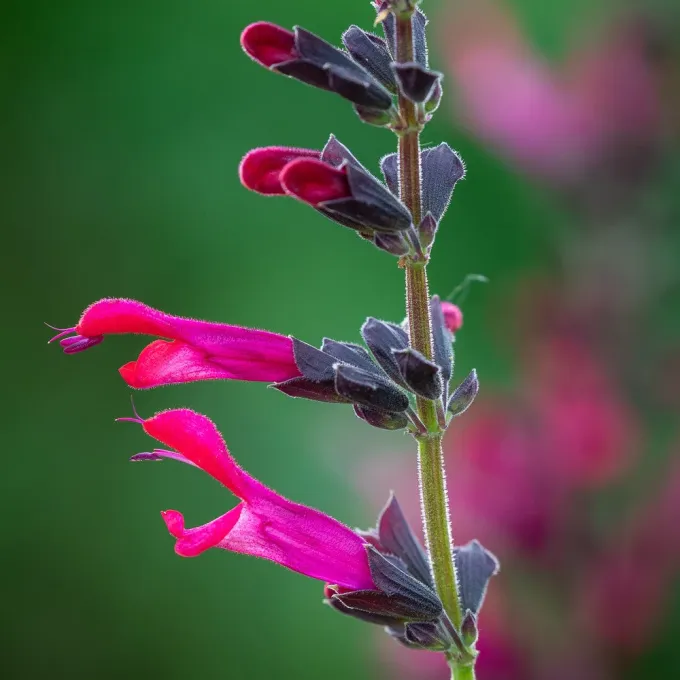
Description
Growing requirements
The hybrids resulting from crosses between Salvia guaranitica and Salvia x westerae are distinguished members of the Lamiaceae family. These perennials are bred for their unique aesthetic appeal and distinct botanical characteristics, making them a subject of interest for both breeders and landscape architects.
Optimal growth requires well-drained, fertile soil with a neutral to slightly acidic pH. These plants thrive in full sun or light shade, provided the site is protected from harsh winds and offers sufficient air circulation to prevent foliage dampness.
Climatic requirements are specific; these hybrids generally prefer warmer temperate zones. In colder regions, they must be treated as tender perennials or overwintered in protected environments, such as greenhouses or indoor storage, to ensure survival.
Agrotechnical practices involve consistent irrigation during the peak growth season, ensuring the root zone remains moist but never waterlogged. Regular organic or mineral fertilization during the spring and early summer supports vigorous stem growth and prolonged flowering.
Their primary use is ornamental, serving as key elements in perennial borders, meadow-style plantings, and large-scale decorative landscaping. They are highly regarded for their long blooming period and their utility as a source of nectar for local pollinators.
Main diseases and pests
Pathogenic threats include fungal diseases such as powdery mildew, which often develop during periods of high humidity and poor ventilation. Keeping the planting density optimized is a fundamental step in mitigating these environmental risks.
Pest management focuses on controlling aphids, whiteflies, and spider mites, which can cause significant damage to young shoots. Integrated pest management strategies, utilizing both physical and biological controls, are recommended for professional-scale operations.
Root rot, often caused by Pythium or Phytophthora species, represents a critical threat when soil drainage is insufficient. Careful soil preparation and the implementation of drainage tiles or raised beds are effective preventive measures.
Slugs and snails present an ongoing challenge, particularly during moist seasons, as they feed on the succulent tissue of the leaves. Barrier methods and biological pest control are preferred to minimize chemical input in ornamental garden settings.
Nutrient imbalances, particularly micronutrient deficiencies, can lead to foliage chlorosis or stunted development. Regular soil testing and precise application of foliar or granular fertilizers are essential to maintain the health and structural integrity of the plants.