
Hybrid Grevillea victoriae and Grevillea rhyolitica
Hybrids between Grevillea victoriae and Grevillea rhyolitica
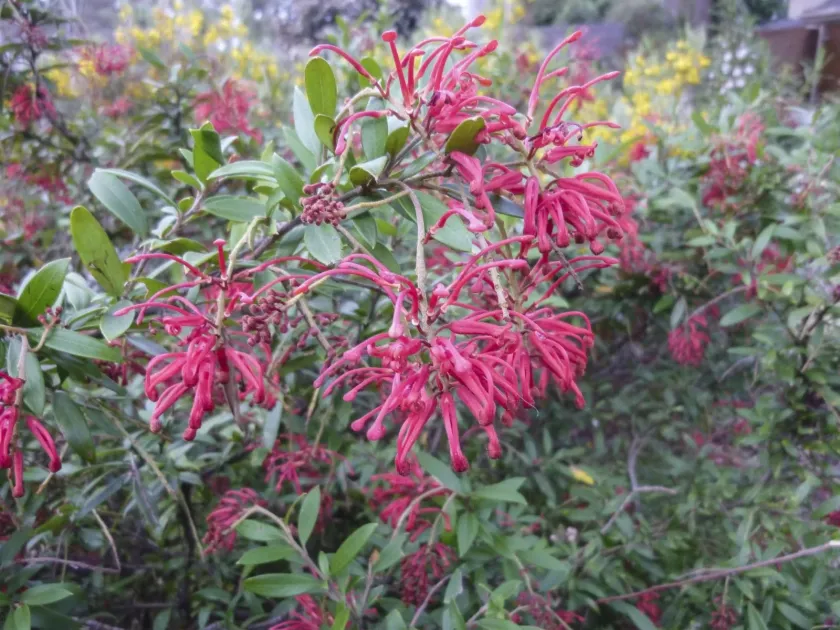
Description
Growing requirements
This hybrid is a result of cross-breeding between Grevillea victoriae and Grevillea rhyolitica, belonging to the Proteaceae family. It is prized in horticulture for its hardiness, evergreen foliage, and distinct, long-lasting flowers typical of the genus.
The plant exhibits a robust structure, often growing as a medium-sized shrub that is well-suited for landscaping in temperate climates. It inherits the cold tolerance of Grevillea victoriae and the vibrant floral traits of Grevillea rhyolitica.
Cultivation requires well-drained, slightly acidic soil. Similar to other Proteaceae, this plant is sensitive to high phosphorus levels in fertilizers; therefore, it is recommended to use specialized fertilizers formulated specifically for native Australian plants.
Exposure to full sun is ideal for promoting vigorous flowering and maintaining a compact shape. While the plant is drought-tolerant once established, it requires consistent monitoring during its initial growth phase and prolonged heatwaves.
Pruning is an essential agrotechnical practice to keep the plant vigorous and prevent it from becoming straggly. It is best to prune after the flowering season to encourage new growth and denser canopy development for the following year.
Main diseases and pests
Root rot caused by Phytophthora species is the most significant threat to this hybrid. Proper drainage is the primary defense, as waterlogged conditions almost inevitably lead to the decline of the root system.
Insect pests like scale insects or mealybugs may infest the stems and leaves, especially if the plant is stressed or grown in poorly ventilated conditions. Regular inspections and the use of horticultural oils can help manage these pests effectively.