
Grevillea longistyla x johnsonii
Hybrids between Grevillea longistyla and Grevillea johnsonii
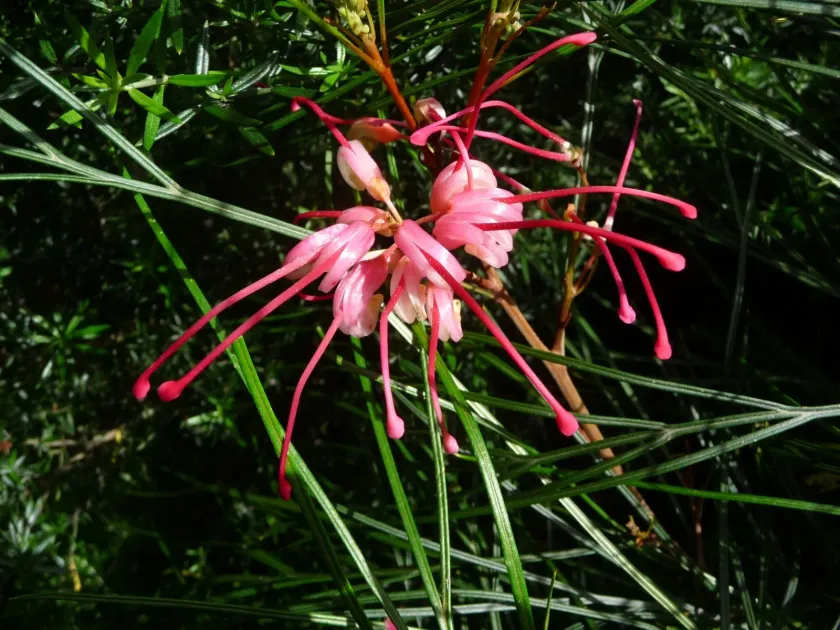
Description
Growing requirements
Grevillea longistyla x johnsonii is a spectacular hybrid shrub belonging to the Proteaceae family. Originating from Australian native species, it is highly valued for its striking, long-lasting flowers and fern-like foliage, making it a popular choice for ornamental gardens.
The plant thrives in well-draining, acidic to neutral soils. It is critical to ensure that the planting medium is not overly nutrient-dense, especially regarding phosphorus, as plants in the Proteaceae family are notoriously sensitive to excessive fertilizers.
Full sun exposure is necessary for healthy development and profuse flowering. While the plant can handle moderate wind, it should be protected from harsh, cold winter drafts which can damage the tender branch tips and foliage.
Watering requirements are relatively low once the plant is established. However, during the initial growing stages, consistent moisture is needed, provided that the soil profile is completely permeable to prevent any water pooling around the root crown.
Routine pruning is a fundamental part of the maintenance program. By cutting back the long, leggy stems after the flowering season, gardeners can encourage a denser, more compact growth habit that produces more abundant blooms the following year.
Main diseases and pests
The most significant threat to this Grevillea hybrid is root rot caused by Phytophthora species. This condition is triggered by waterlogged soil conditions and poor drainage, often leading to rapid decline and death of the shrub.
Scale insects and mealybugs are the most common pests affecting these plants. They cluster on stems and leaf undersides, drawing sap from the shrub and causing stunted growth if left untreated for an extended period.
Integrated pest management should be employed, prioritizing the use of horticultural oils rather than harsh chemicals that might stress the plant. Regular monitoring of the foliage is essential for early detection of these pests.
Nutrient deficiency, specifically iron chlorosis, can occur if the soil pH is too high. This is evidenced by yellowing leaves with green veins, which indicates that the plant is unable to absorb essential micronutrients from the environment.
To keep the plant healthy, avoid mechanical damage to the roots during weeding or planting nearby. Maintaining a clean garden environment and preventing overcrowding of plants helps minimize the risk of both fungal outbreaks and insect colonization.