
Hybrid Gentiana triflora and Gentiana scabra
Hybrids between Gentiana triflora and Gentiana scabra
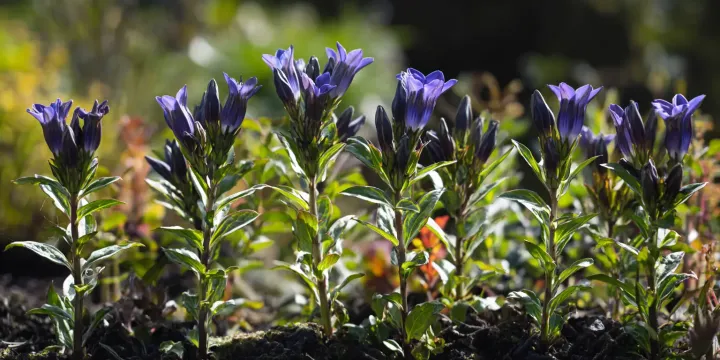
Description
Sowing dates
Propagation of this gentian hybrid is primarily achieved through seeds or vegetative division of mature clumps. Sowing seeds is best performed in late autumn or early winter in open ground or trays, as the seeds require a mandatory stratification period at low temperatures for one to two months.
For spring sowing, seeds require pre-treatment to improve germination rates. The optimal time for indoor sowing is February or March, followed by transplanting the hardened plants to their permanent location in late spring.
The potting mixture for sowing must be light, loose, and contain a sufficient amount of sand or gravel grit to ensure excellent drainage. Seeds are sown superficially, covered only slightly with substrate, as they require access to light for germination.
Germination is often slow, making it essential to maintain stable humidity levels without over-watering, which can lead to fungal infections such as damping-off. Pricking out is conducted after the development of two pairs of true leaves.
Transplanting into the garden should be done at intervals of 20–30 cm between plants to ensure optimal airflow, which prevents the development of fungal diseases in dense plantings.
Growing requirements
The hybrid gentian, resulting from the cross-breeding of Gentiana triflora and Gentiana scabra, prefers areas with light shade, especially during midday hours, though it can thrive in full sun provided the soil remains consistently moist.
This crop has high demands regarding soil structure; ideal conditions are provided by loamy soils rich in organic matter with excellent permeability. It is crucial to prevent waterlogging, as the root system of gentians is highly sensitive to excessive moisture.
The optimal soil pH range for this cultivar is slightly acidic (pH 5.5–6.5). In highly alkaline soils, plants may suffer from chlorosis, requiring the application of peat or specific acidifying fertilizers to correct the balance.
The plant exhibits high cold hardiness typical of its East Asian ancestors and withstands severe winters well if covered by snow or a light layer of mulch, such as spruce branches.
Throughout the growing season, regular but moderate irrigation is required. During hot summer months, it is essential to monitor soil moisture to prevent the root ball from drying out, which can cause premature bud wilting and loss of ornamental value.
Main diseases and pests
The most common pests affecting hybrid gentians are slugs and snails, which actively feed on tender leaves and buds during damp weather. Protective measures include physical barriers or the use of metaldehyde-based molluscicides.
Fungal diseases, particularly grey mould (Botrytis), can infect the plant under conditions of high humidity and poor ventilation. To manage these pathogens, timely application of systemic fungicides is recommended.
In stagnant air conditions, various leaf spots may appear on the foliage. Proper site selection and maintaining sufficient distance between plants are the primary preventive measures against these infections.
Occasionally, young shoots may be attacked by aphids, which drain nutrients and stunt growth. Upon detection, treatment with biological or chemical insecticides should be applied to control the infestation.
Root rots are frequently the result of improper irrigation and the use of heavy, water-retaining soils. Once the root system is severely compromised, recovery is difficult, emphasizing the importance of strictly following agrotechnical standards from the moment of planting.