
Yellow gentian
Gentiana lutea L.
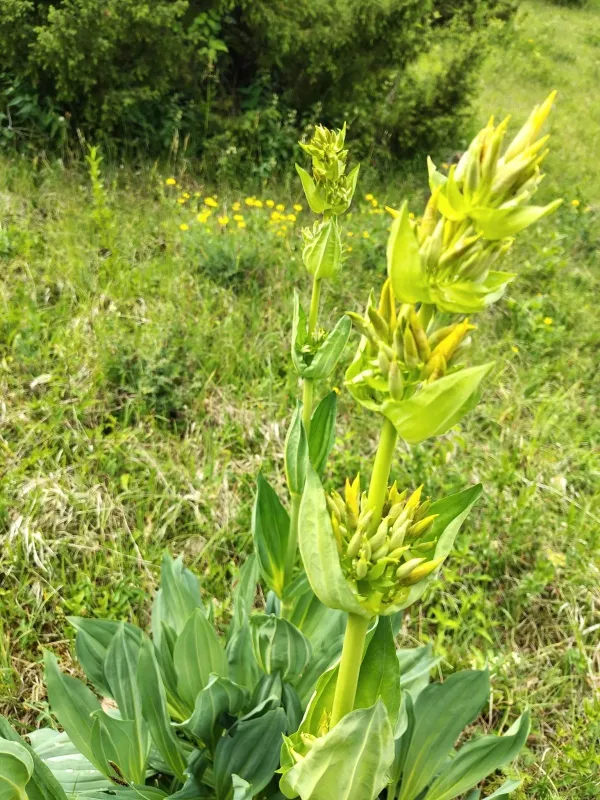
Description
Sowing dates
Cultivating Yellow Gentian requires patience as seeds are notoriously difficult to germinate. They possess a deep dormancy and require a period of cold stratification, mimicking winter conditions, to break this state before sowing can occur successfully.
Sowing should be performed in late autumn for outdoor beds, allowing the natural freeze-thaw cycles to handle stratification. For indoor or nursery settings, seeds are kept in a cold environment for at least 8–12 weeks prior to sowing in early spring.
Seeds are extremely small and should be scattered over the surface of well-prepared, fine seedbeds. They must not be buried deeply; a light dusting of substrate is sufficient to maintain moisture while allowing exposure to light for germination.
Seedlings develop slowly and are delicate during the first months of growth. Consistent surface moisture must be maintained, as any drying out during this period will lead to rapid seedling mortality.
Once seedlings have reached the two-leaf stage, they can be carefully pricked out into individual pots. It is advisable to wait until the plants are robust enough before moving them to their permanent location in the field.
Growing requirements
Yellow Gentian is a long-lived perennial of the Gentianaceae family, naturally found in mountainous regions. It thrives in cool, alpine climates and is well-adapted to areas with significant rainfall and high air humidity.
The ideal soil for this species is deep, loamy, and fertile, with an excellent drainage system. While it prefers consistent moisture, the plant is highly susceptible to root diseases if water is allowed to pool around the base.
Regarding light, it prefers open, sunny locations but benefits from partial shade in regions with intense summer heat. The plant is cold-hardy and requires a winter dormancy period to complete its annual biological cycle.
Soil pH should be maintained in the neutral to slightly acidic range. Amending the soil with high-quality organic compost prior to planting is recommended to provide the slow-release nutrients needed for the root's growth.
Due to its long-term nature, the crop requires careful field selection. The soil should be loose and friable to a depth of at least 40 cm, allowing the massive taproot to develop without obstruction.
Yield
Yellow Gentian is grown primarily for its thick, bitter roots, which contain high concentrations of medicinal compounds. The harvest cycle is long, typically ranging from 5 to 7 years from the date of planting.
In a well-managed plantation, the yield of dried roots can reach 3 to 5 tons per hectare. Success is defined by the weight and quality of the taproot, which continues to grow in size throughout the plant's long lifespan.
Economic profitability depends on density management. Planting too densely results in thinner roots, while spacing them properly allows for the development of the high-mass rhizomes demanded by the pharmaceutical market.
Fertilization regimes focus on long-term soil health rather than rapid growth. The plant utilizes organic inputs efficiently to build up its chemical profile during the multi-year development phase.
Farmers must plan their rotation accordingly, as the extended duration makes Yellow Gentian a specialist crop that requires dedicated land for significant periods without being turned over.
Main diseases and pests
Slugs and snails are the primary pests, particularly during the juvenile stages of the plant. They can decimate a young plantation overnight, making barrier defenses and baiting necessary during damp weather.
Fungal diseases like Grey Mould (Botrytis) represent a major threat in humid or overcrowded conditions. Proper spacing is essential to ensure adequate air circulation around the crown of the plant.
Root rot is the most common cause of plantation failure, usually linked to poor soil drainage. Once an infection is detected in the root system, it is often too late to save the plant, and it must be removed.
Aphids occasionally infest the flowering stalks, draining the energy needed for root development. If populations exceed economic thresholds, they should be managed with mild, ecologically sensitive insecticides.
Overall, maintaining healthy, vigorous plants is the best defense. This includes avoiding unnecessary soil compaction and ensuring the plants are not stressed by excessive drought or nitrogen-heavy fertilization.
Harvesting
Harvesting takes place in autumn once the leaves have begun to wither and the plant has entered its winter state. This marks the culmination of several years of cultivation and care.
The roots are carefully lifted from the soil to avoid wounding. Mechanical harvesting equipment must be adjusted to reach the significant depth of the taproots without damaging their structure.
Immediate processing is required post-harvest. The roots must be thoroughly cleaned of all soil and debris, with side rootlets trimmed to ensure the final product is pure and easy to process.
Drying is performed in climate-controlled units at temperatures strictly below 60°C. High heat will vaporize the vital bitter compounds that constitute the plant's medicinal value.
Finally, the dried product is sorted by size and quality, then stored in moisture-proof packaging. Proper storage is crucial to prevent the re-absorption of humidity and degradation of the active alkaloids.