
Dahurian gentian
Gentiana dahurica Fisch.
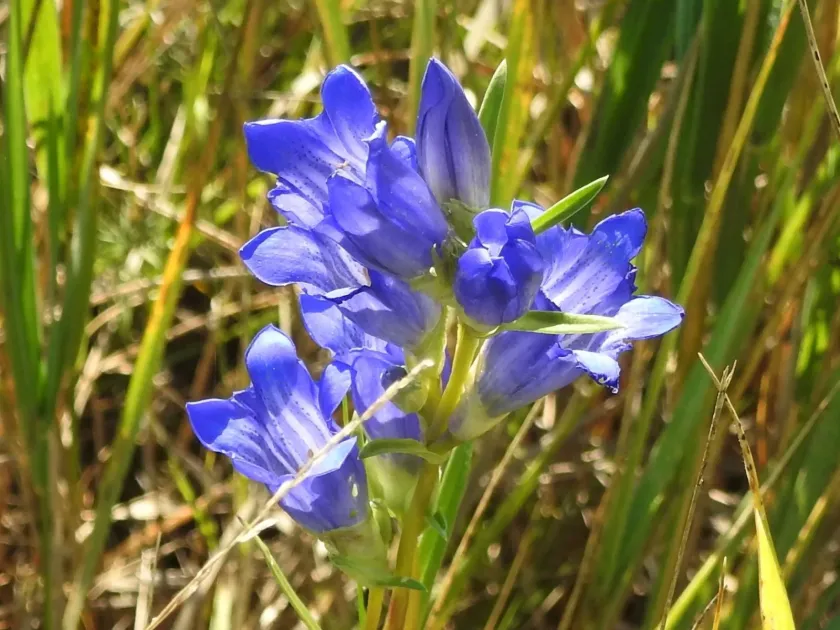
Description
Sowing dates
Seeds of Dahurian gentian have low germination energy, so industrial cultivation often involves cold stratification for 1–2 months. Sowing in open ground is carried out either before winter or in early spring, as soon as the soil warms up to 5–8 degrees Celsius.
When sowing in spring, the seeds should not be buried deeper than 0.5–1 cm, as they are highly sensitive to light and depth. An optimal planting scheme involves row spacing of 30 to 45 cm, providing enough room for the root system to develop.
During the first year of life, the crop develops slowly, forming only a rosette of basal leaves. Intensive growth of vegetative mass and the development of the taproot are observed starting from the second year after sowing.
To speed up the production of commercial raw materials, transplanting method can be used. Seedlings are planted in their permanent place with a density of up to 10–12 plants per square meter.
Planting areas should be protected from intense direct midday sun if the regional climate is characterized by extremely high summer temperatures.
Growing requirements
Dahurian gentian is a hardy plant of the Gentianaceae family, native to the steppe and meadow zones of Eastern Siberia, Mongolia, and China. The crop prefers moderately moist, loamy, or sandy soils with a neutral or slightly acidic pH level.
The plant has high frost resistance and can withstand harsh winters with soil freezing, making it suitable for introduction in regions with a continental climate. An important condition is good drainage: stagnant meltwater is detrimental to the roots.
During the active growing season, the crop requires regular but moderate watering. Excessive soil moisture at high air temperatures often triggers root rot and inhibits plant development.
The planting site should be well-lit, although light afternoon shading is permissible. In natural conditions, gentian is often found in steppe meadows, where the soil is rich in humus and moderately aerated.
- Optimal growth temperature: 15–22°C.
- Light requirement: high, sun-loving plant.
- Soil type: fertile, moisture-retentive, with good drainage.
Yield
The yield of Dahurian gentian raw material, which consists of dried roots, is estimated at the third or fourth year of vegetation. On average, 1.5 to 3 tons of dry root can be obtained from one hectare of industrial plantings.
The quantitative yield of the product depends directly on the agricultural background and the availability of nitrogen-phosphorus fertilizers to the plants. On poor soils without fertilization, productivity is reduced by half.
The biological value of the raw material is determined by the content of bitters, flavonoids, and iridoid glycosides. The maximum concentration of these substances is reached during or immediately after the flowering period.
Harvesting is carried out with consideration of the life cycle: harvesting too early results in concentrations of active ingredients that are below pharmacopoeial standards. Four-year-old plants demonstrate the highest root mass.
Yield stability depends on the absence of weeds in the first two years, as gentian competes poorly with perennial grasses and thistles in the seedling stage.
Main diseases and pests
The main danger for gentian plantings is fungal diseases that develop in high humidity. Powdery mildew can affect the leaf surface, reducing the plant's overall photosynthetic activity.
Root rot is the most serious economic risk, occurring when irrigation protocols are violated or sites with heavy, poorly aerated soils are chosen. Affected specimens should be removed immediately.
Among pests, aphids and various species of slugs cause the most damage, attacking young leaves during the spring awakening. Slugs are especially active in rainy weather, feeding on the tender parts of the rosettes.
Nematodes can attack the root system, causing deformation and stunted growth. To prevent the spread of pests, it is recommended to follow crop rotation and return the crop to its previous location no sooner than 5 years later.
Disease prevention consists of maintaining optimal planting density to ensure ventilation and using fungicides if the first signs of infection are detected.
Harvesting
Harvesting (digging up the roots) is carried out in late autumn, when the aerial part of the plant completely dies off, or in early spring before active sap flow begins. During this period, the roots show maximum accumulation of medicinal substances.
Mechanized diggers are used to extract the roots from the soil, allowing for gentle separation. It is important to avoid mechanical damage, as pathogens can enter through these points.
After digging, the roots are cleaned of soil and washed with running water. Large rhizomes should be cut lengthwise to speed up the drying process, as they are characterized by high density and fleshiness.
Drying of the raw material is carried out in well-ventilated rooms or specialized dryers at a temperature not exceeding 50-60°C. At higher temperatures, useful glycosides are destroyed.
The finished raw material should have a characteristic bitter taste, which is the main indicator of quality. Storage is carried out in dry, dark rooms in paper or fabric containers to preserve active properties.