
Hybrid Echeveria lilacina and Echeveria secunda
Hybrids between Echeveria lilacina Kimnach & R. C. Moran and Echeveria secunda Booth ex Lindl.
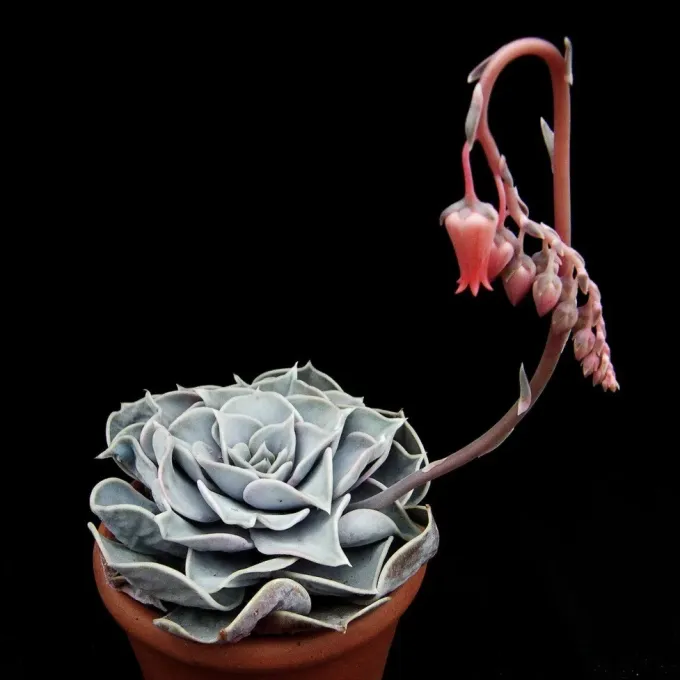
Description
Growing requirements
This hybrid is a member of the Crassulaceae family, characterized by its compact rosette shape and glaucous, powdery leaves. It combines the aesthetic traits of its parent species to create a visually striking ornamental plant.
The culture thrives in bright, direct light conditions. To maintain its tight, compact growth habit, it is necessary to provide at least 6 hours of sunlight daily, though protection from harsh afternoon sun in summer is advised.
The growing medium must be highly porous and well-draining. A professional succulent mix composed of pumice, coarse sand, and a small portion of organic soil provides the aeration required to keep the root system healthy.
Watering requirements are specific: the soil should be allowed to dry out completely before deep watering. During the winter dormancy period, the plant should be kept dry to prevent fungal growth and tissue softening.
In terms of use, this plant is primarily cultivated as a houseplant or a specimen in rock gardens. Its geometric symmetry makes it a favored subject for container gardening, including decorative arrangements and terrariums.
Main diseases and pests
Root rot is the most common threat, usually caused by overwatering or poor soil drainage. When the roots remain wet for extended periods, the plant loses its ability to absorb nutrients and inevitably decays.
Mealybugs are frequent pests that infest the rosettes. Their presence is often detected by a white, cotton-like substance between the leaves. Immediate intervention with appropriate insecticides is required to prevent spread.
Aphids may occasionally attack the tender flower stalks during the blooming season. These pests extract sap from the developing buds, causing them to wilt or deform before the flowers can open properly.
Fungal leaf spot can occur if there is insufficient air circulation in the growing environment. Keeping the leaves dry and ensuring good airflow around the plants significantly reduces the risk of such infections.
Using sterile soil and quarantine measures for new plants are essential strategies to prevent the introduction of pests and diseases into your collection. Vigilance remains the best defense against long-term damage.