
Hybrid of Echeveria elegans and Echeveria pulidonis
Hybrids between Echeveria elegans and Echeveria pulidonis
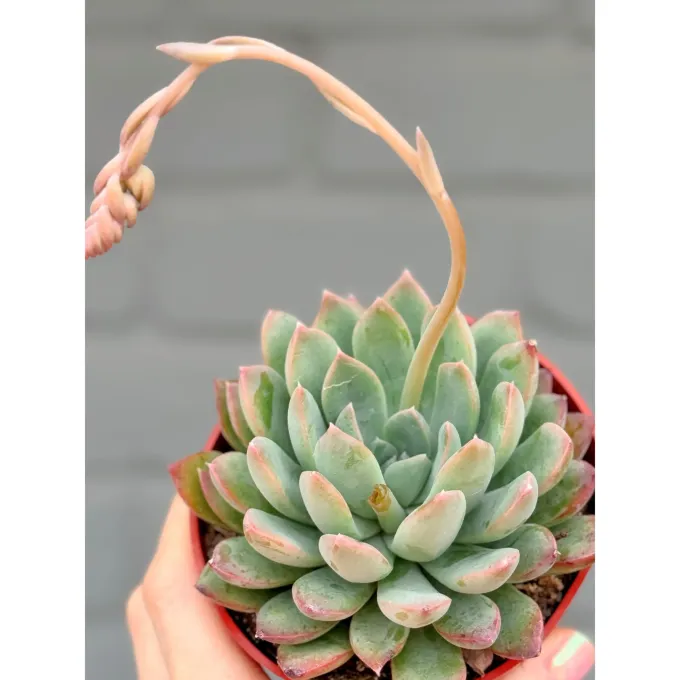
Description
Sowing dates
Propagation of this hybrid is primarily carried out vegetatively through leaf cuttings or division of offsets. The spring and summer months are the most effective time for this process, coinciding with the plant's peak growth phase.
Seed propagation is possible but less common, as hybrids may exhibit segregation in their traits compared to the mother plant. Seeds require a consistent temperature of 20–25 degrees Celsius and a light, well-draining substrate to germinate successfully.
The medium for young plants should consist of a mix of peat, perlite, and coarse sand. This composition ensures optimal aeration, which is critical for developing a robust root system early on.
Young succulents need careful handling during the first weeks. Watering should be kept to a minimum until the roots are established, and the substrate should remain slightly moist but never waterlogged.
Cuttings must be allowed to callus over in a dry, shady spot for two to three days before being inserted into the soil. This prevents the sensitive cut tissue from rotting due to soil-borne pathogens.
Growing requirements
This hybrid belongs to the Crassulaceae family and inherits the aesthetic beauty of Echeveria elegans combined with the durability and unique leaf margin markings of Echeveria pulidonis.
The plant requires high light intensity to maintain its characteristic compact, rosette-forming habit. In indoor environments, placing it in a south-facing window or providing supplemental LED grow lights is essential for preventing structural degradation.
Temperature management is key; while the plant is tolerant of heat, it thrives in environments that mimic its natural habitat. During winter, a cooler period (10–15 degrees Celsius) helps the plant enter dormancy, which is vital for spring blooming.
Watering should be deep and infrequent, allowing the soil to dry out completely between waterings. Any water that remains trapped in the center of the rosette must be removed to prevent crown rot.
The soil should be inorganic-rich and highly porous. Using a specific cactus and succulent mix amended with extra pumice or perlite will provide the necessary drainage for long-term health.
Main diseases and pests
The primary threat to this cultivar is root and crown rot, caused by excessive moisture and poor air circulation. Using well-draining pots with drainage holes is the most basic yet effective preventative measure.
Mealybugs are the most frequent pests, hiding in the tight crevices between leaves. They can be removed manually with alcohol-soaked cotton swabs or treated with systemic pesticides if the infestation is widespread.
Spider mites may occur during periods of low humidity and high heat. These pests cause discoloration and surface damage, necessitating regular cleaning and, if necessary, targeted acaricide applications.
Loss of coloration or leggy, stretched growth (etiolation) indicates insufficient light. While not a disease in the conventional sense, it compromises the plant's vigor and makes it more susceptible to further stressors.
- Maintain good airflow around the rosette.
- Avoid overhead watering of the leaves.
- Regularly inspect the underside of leaves for early signs of pests.