
Hybrids of Echeveria agavoides and Echeveria lilacina
Hybrids between Echeveria agavoides and Echeveria lilacina
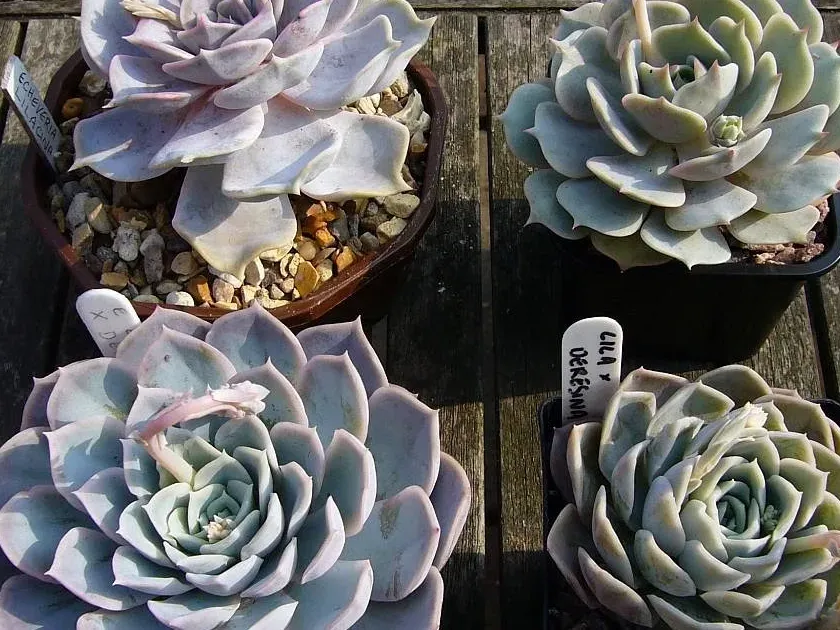
Description
Growing requirements
Hybrids resulting from the cross between Echeveria agavoides and Echeveria lilacina belong to the family Crassulaceae. These cultivated succulents are highly valued for their symmetrical rosette structure and the unique blend of foliage texture, combining hard, pointed leaves with a delicate pruinose bloom.
The core requirement for these hybrids is bright, direct sunlight. Proper light levels ensure the rosette remains compact and dense, preventing etiolation, which is the stretching of stems that renders the plant structurally weak and susceptible to disease.
The substrate must be highly inorganic to facilitate rapid drainage. A standard mix should contain volcanic rock, perlite, and coarse sand. Avoiding heavy organic materials is essential to prevent moisture retention in the root zone, which is the primary cause of failure in succulent cultivation.
Temperature management follows the cycle of natural growth. During the active growing season, temperatures between 20°C and 25°C are ideal. A cooler dormancy period in winter, ideally around 5°C to 10°C, is crucial for simulating natural conditions and ensuring floral development.
Watering must follow the "soak and dry" method, ensuring the soil is completely dehydrated before the next application. Providing excessive hydration in low-light or cold conditions is detrimental and almost certainly leads to root loss.
Main diseases and pests
The most significant threats to Echeveria hybrids are fungal pathogens and rot, typically triggered by improper irrigation and poor air circulation. Root rot and stem rot require immediate intervention, often involving the removal of compromised tissue and repotting.
Mealybugs remain the primary pest affecting this cultivar. They tend to hide in the tight spaces between leaves and at the base of the stem, feeding on sap and often introducing secondary viral or fungal infections into the plant body.
Pest management relies on both physical removal and chemical treatments. For large infestations, systemic insecticides are preferred. Caution must be exercised to avoid damaging the waxy bloom on the leaves during any treatment or manual cleaning.
Spider mites can also be problematic, especially in environments with stagnant, overly dry air. They cause subtle discoloration and scarring on the leaf surface, which can diminish the visual appeal and overall vigor of the succulent.
Proactive care involves maintaining good airflow around the rosettes. By ensuring the leaves dry quickly after watering and keeping the plant environment clean, growers can significantly reduce the risk of infestation and disease outbreak.