
Hoya quinquenervia
Hoya quinquenervia
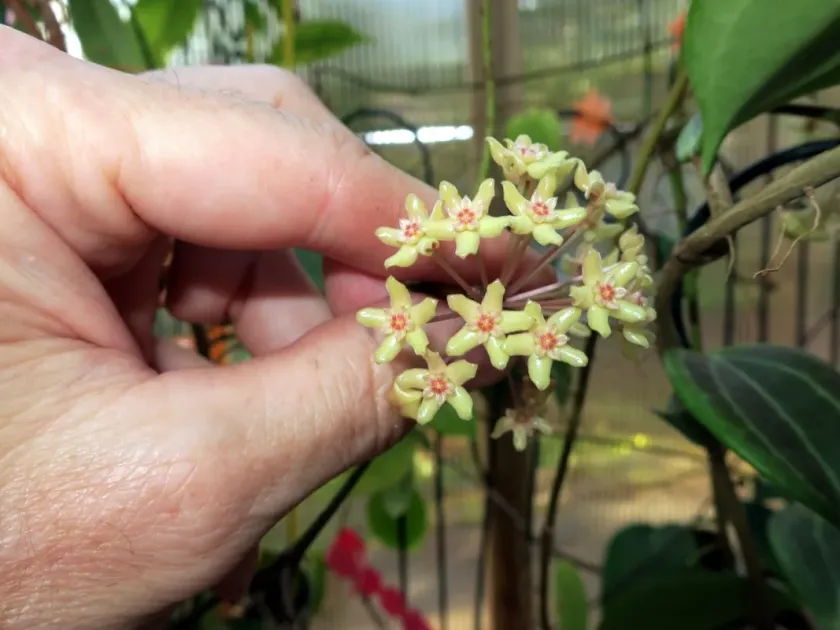
Description
Growing requirements
Hoya quinquenervia is a perennial evergreen vine belonging to the Apocynaceae family. Native to the Philippines, it naturally occurs as an epiphyte in tropical forests, where it utilizes tree trunks for structural support and gains moisture from ambient humidity.
To successfully cultivate this species, it is essential to provide a well-draining, airy potting medium. A mixture consisting of orchid bark, coconut coir, perlite, and a small amount of charcoal is ideal to mimic the natural epiphytic conditions.
The climate requirements include high humidity levels, preferably maintained above 60%, and stable ambient temperatures. It thrives in a temperature range between 20°C and 26°C, as extreme cold or drafts can cause irreversible damage to the foliage.
Lighting should be bright but indirect; direct sunlight can scorch the thick, characteristic leaves of this hoya species. A spot near an east-facing or west-facing window is usually optimal for encouraging healthy growth and potential blooming.
Watering should be performed only when the substrate has partially dried out. Waterlogging is the primary cause of plant failure, leading to root asphyxiation and subsequent decay of the root system, which is common in confined containers.
Main diseases and pests
The primary pests affecting Hoya quinquenervia are mealybugs, scale insects, and spider mites. These pests thrive in low-humidity environments and can quickly infest the succulent foliage, particularly in the leaf axils and along the stems.
Root rot, driven by fungal pathogens like Phytophthora, is the most significant threat to plant health when soil drainage is inadequate. Managing moisture levels and ensuring proper air circulation around the vine are the best preventative measures against fungal issues.
If an infestation occurs, application of systemic insecticides or neem oil solutions is recommended for effective control. It is important to repeat the treatment according to the life cycle of the pest to ensure all generations are eradicated.
Proper hygiene is crucial for preventing the spread of diseases. This includes sterilizing tools before use and ensuring that the plant is not overcrowded, which helps maintain airflow and prevents the buildup of humidity-loving pathogens.
Regular monitoring of the plant's health, particularly checking the undersides of leaves and the growing tips, allows for early detection of potential problems. Early intervention significantly increases the chances of saving the specimen from severe damage.