
Hoya australis
Hoya australis
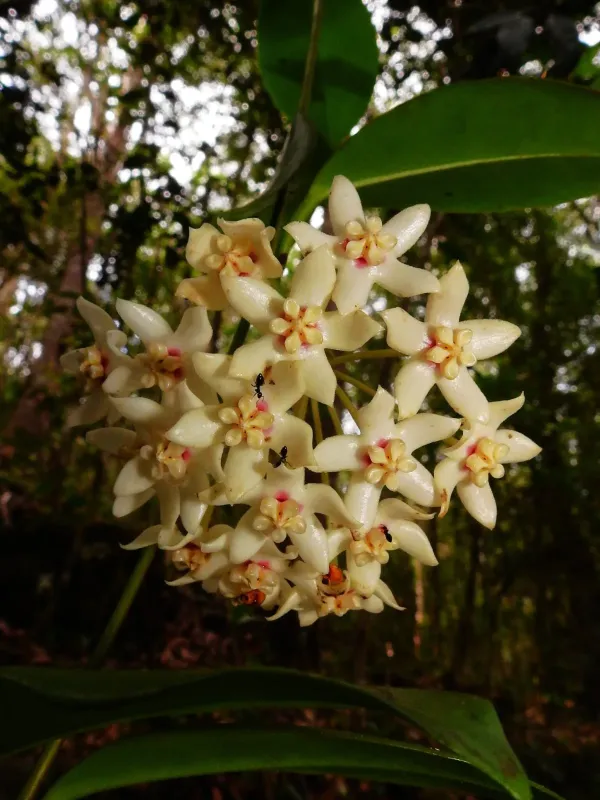
Description
Growing requirements
Hoya australis is a robust evergreen vine belonging to the Apocynaceae family. Native to the rainforests of Australia and the Pacific Islands, it is known for its fragrant flowers and thick, succulent-like foliage which acts as a storage organ.
This species thrives in bright, filtered light conditions. While it can tolerate some morning sun, intense midday exposure should be avoided to prevent foliar damage and yellowing of the leaves in less acclimatized specimens.
Temperature requirements are generally consistent with tropical standards. It performs best between 18°C and 26°C. During the dormant winter season, a cooling period of around 15°C is beneficial to encourage vigorous flowering in the spring.
The substrate must be extremely well-draining, mimicking an epiphytic environment. A mix containing orchid bark, perlite, and high-quality potting compost is recommended to ensure that the root system receives adequate aeration.
Irrigation should follow a soak-and-dry cycle. It is crucial not to leave the roots standing in water, as Hoya australis is highly susceptible to root rot in compacted or waterlogged soils.
Main diseases and pests
Mealybugs are the primary pest concern for Hoya australis. They tend to hide in the joints between stems and leaves, extracting sap and weakening the plant's structural integrity.
Spider mites can become problematic during low-humidity periods. These microscopic pests manifest as fine webbing on the underside of leaves and can cause rapid desiccation if left untreated.
Root rot caused by Phytophthora or Pythium species is a common pathological issue in agricultural settings where drainage is insufficient. Symptoms include wilting and stem browning.
Fungal leaf spot can occur when water remains on the leaves for extended periods in poorly ventilated conditions, leading to cosmetic damage and potential secondary infections.
Integrated pest management, including regular inspection and the use of insecticidal soaps or systemic treatments, is recommended to maintain the crop in a healthy, marketable state.