
Hoya callistophylla
Hoya callistophylla
Description
Growing requirements
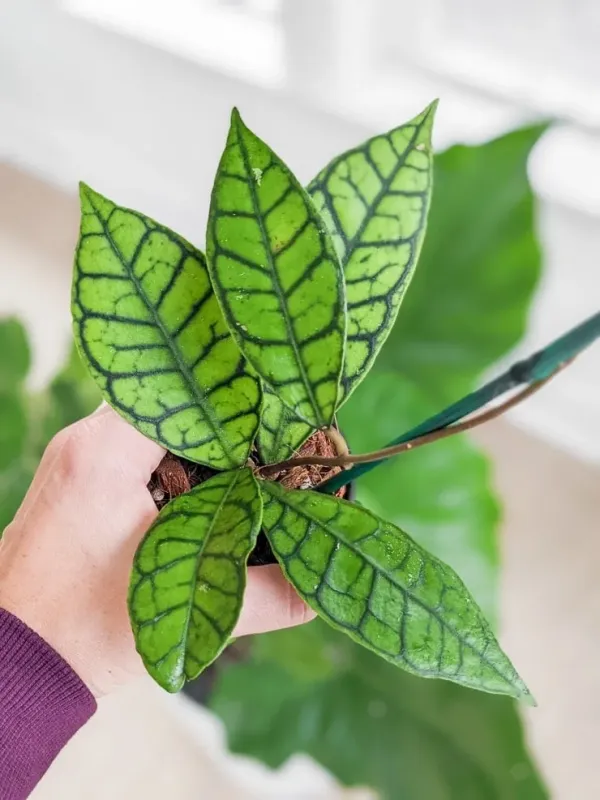
Hoya callistophylla is a member of the Apocynaceae family, native to the tropical rainforests of Borneo. This species is highly sought after by collectors for its stunning, thick leaves that feature a prominent, net-like venation pattern which darkens under bright lighting conditions.
The culture thrives in warm, humid conditions that mimic its natural habitat. It prefers temperatures between 20°C and 27°C. It is essential to protect the plant from cold drafts, which can cause leaf drop and stunt the development of new vining growth.
A well-draining, airy substrate is mandatory for healthy development. A typical mix should include high-quality orchid bark, perlite, charcoal, and a small amount of coco coir. This composition allows for rapid drainage and prevents the roots from sitting in stagnant water.
Bright, indirect light is necessary to maintain the plant's structural integrity and leaf coloration. If the light intensity is too low, the plant will produce smaller, pale leaves with less distinct veining. Morning sun is generally tolerated well, but intense afternoon sun should be filtered.
Watering management is the most critical aspect of the plant's agrotechnology. The medium should be allowed to dry out significantly between watering sessions. Overwatering is the primary cause of plant death, as the fine root system of this species is highly susceptible to rot.
Main diseases and pests
The most common pests affecting the crop include mealybugs and spider mites. These can thrive in low-humidity environments, so maintaining consistent moisture levels and frequent inspections are essential to prevent infestation.
Root rot, often caused by poor drainage or overwatering, is the main disease threat. If symptoms appear, the plant should be repotted into fresh, dry substrate and damaged roots must be carefully trimmed away with sterilized tools.