
Hoya pauciflora
Hoya pauciflora
Description
Growing requirements
Hoya pauciflora is a distinct species belonging to the Apocynaceae family, native to the tropical rainforests of India and Sri Lanka. As an epiphytic vine, it has evolved to thrive in environments with high ambient humidity and filtered light, making it a prized specimen for indoor collectors.
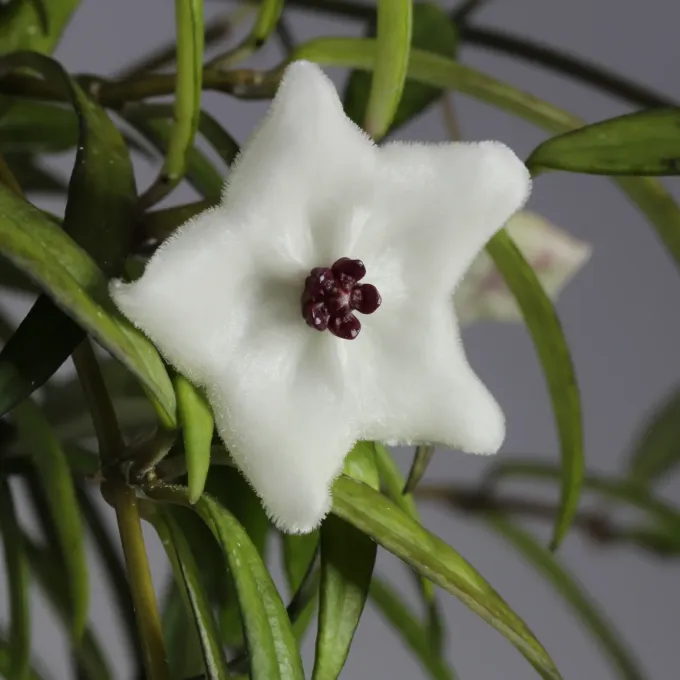
Botanically, this species is defined by its slender vines and elongated, deep green foliage. It is particularly valued for its large, fragrant, star-shaped white flowers, which are relatively solitary compared to the dense clusters found in other Hoya species.
Cultivation requires a specialized growing medium that mimics its natural habitat. A standard mix includes orchid bark, perlite, and charcoal to ensure high aeration. Good drainage is essential, as the roots are sensitive to stagnation and require a porous substrate to remain healthy.
Climate requirements focus on warmth and consistent humidity levels. The plant prefers temperatures between 22°C and 26°C. During winter, it is crucial to keep the plant away from drafts and heaters, as the foliage is sensitive to dry air and sudden temperature fluctuations.
Watering practices should be balanced; the substrate should dry out slightly between sessions to prevent root rot. Mist the foliage regularly during the growing season to maintain the microclimate necessary for the development of new flower buds and healthy leaves.
Main diseases and pests
Mealybugs are the most common pest found on Hoya pauciflora. They often hide in the leaf axils, making early detection difficult. Regular inspection and the use of insecticidal soap or neem oil are effective ways to control populations if they appear.
Spider mites can become a significant issue during the winter when indoor air humidity drops significantly. Maintaining a humidity level of 60% or higher is a highly effective cultural method to prevent infestation and keep the leaves in pristine condition.
Root rot is the most dangerous condition for this species, usually caused by overwatering or poor drainage. Once root rot symptoms appear, the plant must be repotted into fresh, dry substrate, and any decaying roots should be trimmed away with sterilized tools.
Fungal leaf spot may occur if the plant is kept in an environment with poor air circulation. Providing gentle air movement around the plant helps prevent moisture from accumulating on the leaves, thereby reducing the risk of pathogen growth.
Proper nutrient management is key to long-term health. Using a balanced, diluted fertilizer every month during the spring and summer supports vigorous growth and stimulates the production of the plant's characteristic fragrant blooms.