
Hoya pachyclada
Hoya pachyclada
Description
Growing requirements
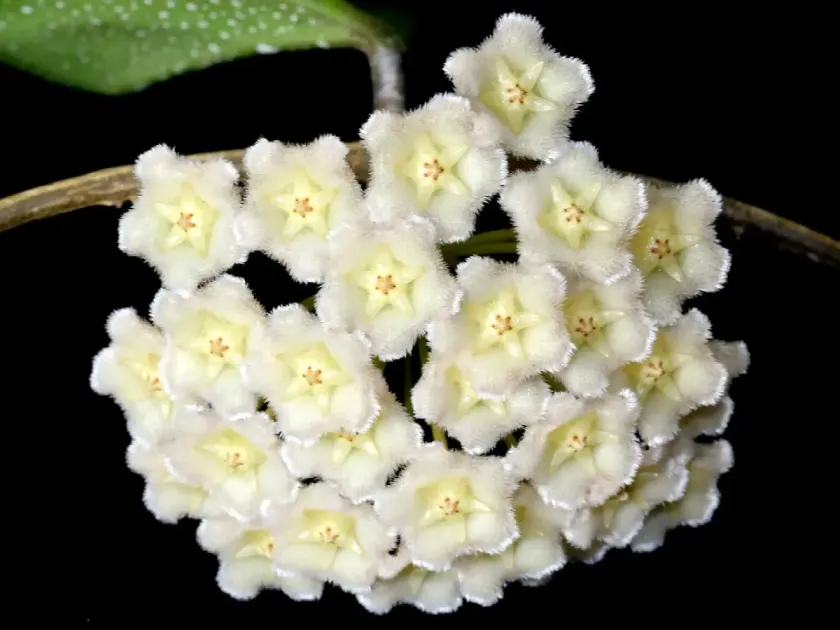
Hoya pachyclada is a succulent vine belonging to the Apocynaceae family. Native to Thailand, this species is highly regarded by collectors for its thick, leathery, rounded leaves and its fragrant, white, porcelain-like flowers arranged in dense umbels.
This species requires high light levels to thrive and produce flowers. It is best positioned in a spot where it receives bright, indirect sunlight throughout the day. Excessive shade will prevent the plant from blooming and may cause the stems to stretch.
Temperature management is crucial for this plant. It prefers warm conditions, ideally between 20°C and 28°C. It is sensitive to cold air and should be kept away from drafts, especially during the winter months when the plant is in a semi-dormant state.
A well-draining, airy substrate is essential for Hoya pachyclada. A mix composed of orchid bark, perlite, and a small amount of coco peat provides the necessary aeration that the sensitive root system requires to avoid oxygen deprivation.
Watering should be approached with caution. As a semi-succulent, it stores water in its thick leaves, making it prone to root rot if the soil remains constantly soggy. Always ensure the substrate is almost completely dry before providing the next deep watering.
Main diseases and pests
Spider mites are a common pest for Hoya pachyclada, especially in environments with low humidity. They typically colonize the undersides of leaves, and frequent misting or washing of the foliage can help keep their populations under control.
Mealybugs are another significant threat, often congregating in leaf axils where they are difficult to reach. Using a cotton swab dipped in rubbing alcohol or applying a systemic insecticide can help eliminate these pests effectively.
Root rot is the most serious disease risk, caused primarily by overwatering or poor drainage. If the leaves become wrinkled and the stems feel mushy at the soil line, immediate repotting into fresh, dry medium is required to save the plant.
Scale insects can occasionally appear on the stems, draining the plant's resources. These pests should be physically removed or treated with appropriate insecticidal oils to prevent the spread of the infestation to other parts of the vine.
Fungal leaf spot may occur if there is stagnant air and high humidity. Ensuring proper airflow around the plant and avoiding wetting the leaves during evening hours significantly reduces the risk of such infections.