
Hoya oreogena
Hoya oreogena
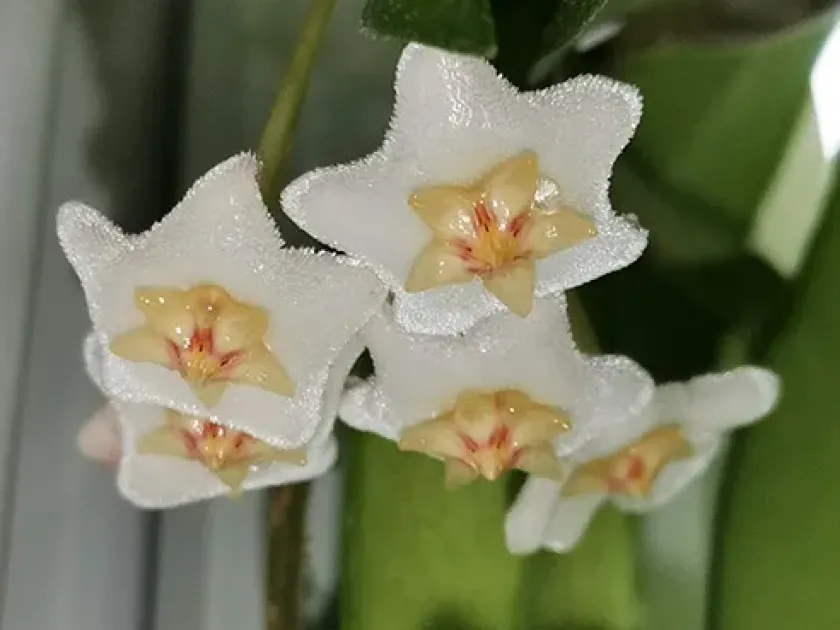
Description
Growing requirements
Hoya oreogena is an epiphytic species belonging to the Apocynaceae family. Native to tropical regions, this plant is well-adapted to high humidity environments where it grows on trees and rocky slopes, drawing nutrients from decomposing organic matter and ambient moisture.
The plant requires a high level of ambient humidity, ideally maintained between 60% and 80%, to mimic its natural tropical habitat. It thrives in temperatures ranging from 20 °C to 26 °C, and care should be taken to avoid exposing the plant to temperatures below 15 °C.
A loose, highly aerated growing medium is essential for Hoya oreogena. A mixture of orchid bark, perlite, charcoal, and a small amount of coco coir is recommended to ensure that the roots receive ample oxygen and do not become waterlogged.
Regarding light requirements, Hoya oreogena prefers bright, indirect sunlight. Exposure to harsh afternoon sun can easily scorch the foliage, while insufficient light levels will hinder the plant's ability to grow vigorously and produce its characteristic blooms.
Watering should be performed carefully, allowing the medium to dry slightly between sessions. Overwatering is the most common mistake in cultivation, leading to rapid degradation of the root system and susceptibility to pathogens in the potting mix.
Main diseases and pests
Mealybugs are the most persistent pest for Hoya species, often hiding in the crevices of the stems and leaf junctions. Regular inspection and the use of insecticidal soaps or systemic treatments are necessary to control these infestations effectively.
Root rot and stem necrosis are the primary pathological threats, usually caused by poor drainage or excessive soil moisture. Maintaining a sterile growing environment and ensuring proper air circulation around the plant are critical strategies for long-term health.