
Hoya odorata
Hoya odorata
Description
Growing requirements
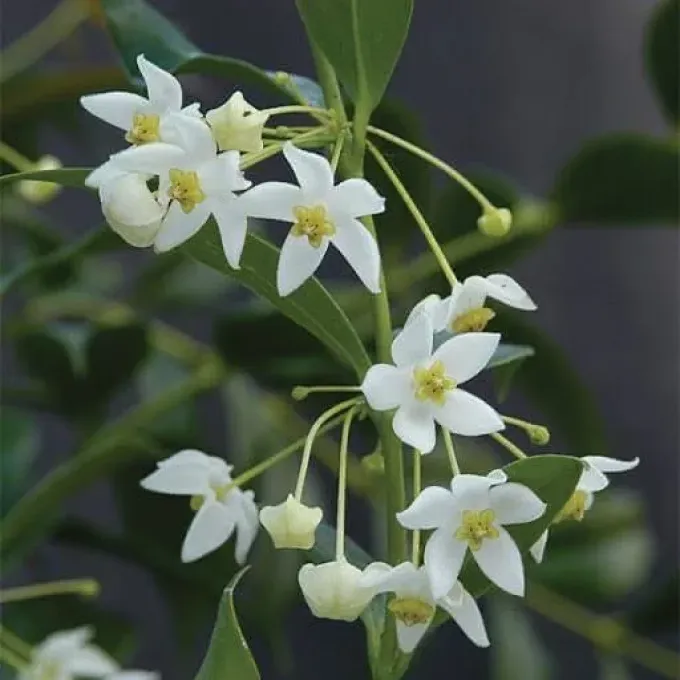
Hoya odorata is a species of flowering vine within the Apocynaceae family, native to the Philippines. This evergreen plant is highly prized for its fragrant white blossoms and glossy foliage, making it a popular choice for indoor horticultural enthusiasts.
The plant thrives in bright, indirect light. Direct exposure to intense sun can scorch the leaves, while insufficient light often leads to stunted growth and failure to bloom. A south or east-facing window with sheer curtains provides the most suitable lighting conditions.
Regarding soil, Hoya odorata requires a porous, well-draining medium. A typical potting mix includes high-quality peat moss, orchid bark, perlite, and charcoal, which ensures oxygen reaches the root system and prevents the moisture retention that can lead to rot.
Agrotechnical care focuses on a balanced watering schedule. The substrate should be allowed to dry slightly between waterings, especially during the dormant season. Maintaining high humidity is also crucial, which can be achieved through regular misting or using a pebble tray.
In terms of usage, Hoya odorata is primarily grown as a decorative ornamental plant for home interiors, botanical displays, and conservatories. Its climbing habit makes it perfect for trellises or hanging baskets, where its fragrant flowers can be easily appreciated.
Main diseases and pests
The most common pests affecting this species include mealybugs, scale insects, and spider mites. These pests typically cluster in leaf axils or on the undersides of leaves, drawing sap and weakening the plant if left unchecked by integrated pest management.
Fungal issues, specifically root and stem rot, are significant threats caused by overwatering or poorly aerated soil. Symptoms often include yellowing leaves, stem softness, and rapid wilting, which require immediate repotting and fungicide intervention to correct.
Bacterial leaf spot can also occur in environments with poor air circulation and excessive moisture on the foliage. To mitigate this, it is essential to ensure that leaves dry out relatively quickly after misting and that the room is well-ventilated at all times.
Regular visual inspections are the best preventative measure against pest outbreaks. If infestation is detected, physical removal using alcohol-soaked swabs or insecticidal soap is recommended before resorting to stronger chemical treatments that might damage the vine.
Finally, environmental stability is vital. Rapid changes in temperature or prolonged cold drafts can induce stress, making the plant more susceptible to opportunistic pathogens. Keeping the vine in a consistent climate is the key to long-term health and vitality.