
Hoya obovata
Hoya obovata
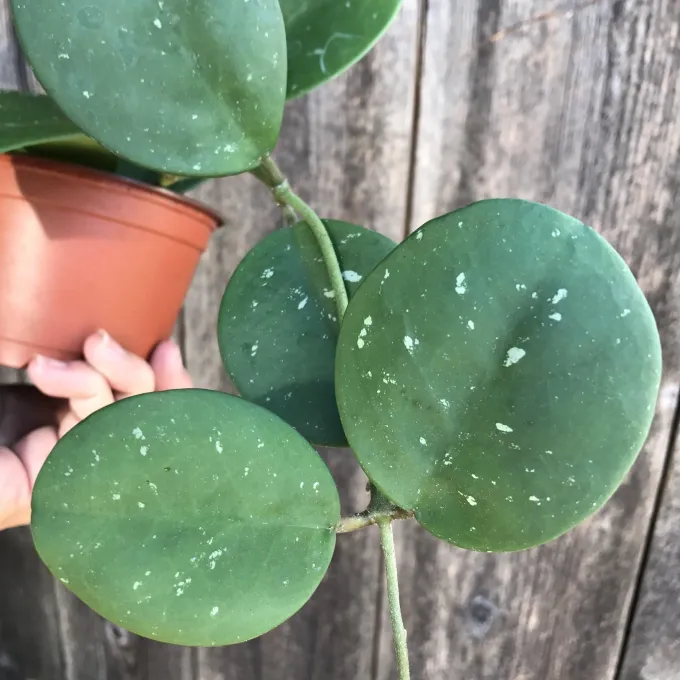
Description
Growing requirements
Hoya obovata is a species of flowering plant in the family Apocynaceae, known for its thick, succulent-like leaves and attractive, fragrant, star-shaped blossoms. Originating from the tropical forests of India and Southeast Asia, this plant naturally functions as an epiphyte, climbing trees to access filtered sunlight.
Botanically, this vine is distinguished by its large, orbicular to obovate leaves that often feature silver-grey flecks or splash patterns. The growth habit is vigorous, and it produces long, leafless stems initially, which eventually fill in with foliage and potential umbels of flowers given the right environment.
Cultivation requires bright, indirect light to maintain the plant's health and encourage flowering. Direct sunlight is generally too intense and can scorch the foliage, while insufficient light leads to sparse growth and a complete lack of blooms. North or east-facing windows are often considered ideal for these plants.
The substrate for Hoya obovata must be highly porous and well-draining, mimicking the natural environment of epiphytes. A mixture consisting of orchid bark, perlite, coco coir, and a small portion of charcoal is highly recommended to ensure oxygen reaches the roots and prevents water retention.
Temperature management is critical for the plant's life cycle. It thrives in ambient temperatures between 20°C and 25°C. A cooler resting period during the winter months, with temperatures around 16°C to 18°C, helps trigger the development of flower peduncles for the subsequent growing season.
Main diseases and pests
Common pests affecting Hoya obovata include mealybugs, which often colonize the underside of leaves and stem joints, as well as spider mites, which thrive in low-humidity conditions. Regular cleaning of leaves and maintaining optimal humidity can significantly reduce the risk of infestation.
Fungal issues, particularly root rot, are the most frequent health threats caused by improper irrigation. Because Hoya obovata stores water in its thick leaves, it is highly sensitive to overwatering; soggy soil leads to rapid necrosis of the root system, often requiring complete repotting and substrate replacement.