
Hoya multiflora
Hoya multiflora
Description
Growing requirements
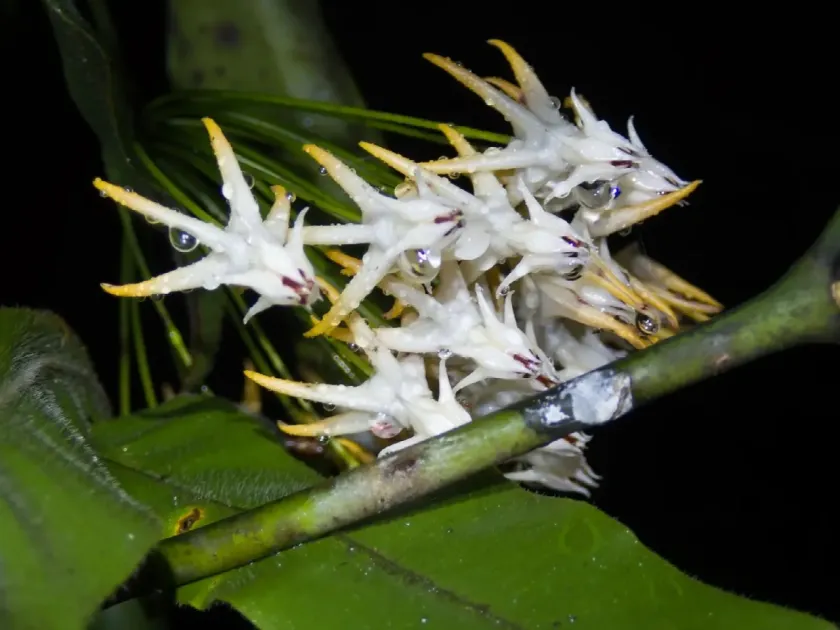
Hoya multiflora, a member of the Apocynaceae family, is a distinct tropical plant known for its unique shooting star-shaped flowers. It originates from the tropical rainforests of Southeast Asia, thriving in high-humidity environments.
Botanically, this species is semi-epiphytic and exhibits a shrub-like habit with upright growth, which distinguishes it from many vining Hoya varieties. Its leaves are lanceolate, medium-green, and carry prominent venation.
The plant requires bright, indirect light to bloom successfully. While it can tolerate lower light levels, growth will slow down, and flowering cycles will significantly diminish or cease entirely.
Soil composition must prioritize drainage and aeration. A mix of orchid bark, perlite, and high-quality peat moss is recommended to simulate its natural epiphytic habitat and prevent root compaction.
Temperature management is critical; the plant performs best between 20°C and 25°C. It is highly intolerant of cold drafts and temperatures below 15°C, which can cause significant stress or leaf drop.
Main diseases and pests
Mealybugs are the most common pests found on Hoya multiflora. They often hide in the dense foliage or the leaf nodes, making them difficult to detect until an infestation becomes severe.
Spider mites are another significant threat, particularly during winter months when indoor humidity levels drop significantly due to central heating systems.
Root rot is the primary physiological disorder caused by overwatering or poor drainage. Once the roots are compromised, the plant shows signs of wilting even if the soil remains moist.
Integrated pest management involves regular leaf inspection and cleaning with a mild soap solution. Systemic insecticides can be used for severe infestations, but caution is required to avoid leaf burn.
Ensuring proper airflow around the plant helps mitigate the risk of fungal infections such as botrytis or leaf spot diseases that thrive in stagnant, humid conditions.