
Hoya linearis
Hoya linearis
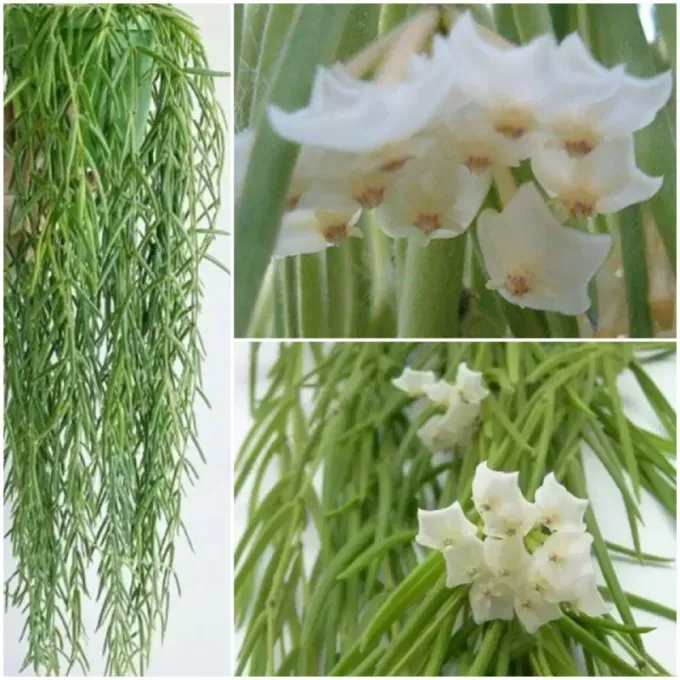
Description
Growing requirements
Hoya linearis is a distinctive trailing epiphyte belonging to the Apocynaceae family. Native to the Himalayan region and mountainous areas of China, this plant naturally thrives in humid forest conditions, clinging to mossy tree branches or rocky substrates.
The plant is characterized by its slender, downward-hanging stems covered in narrow, linear leaves that resemble blades of grass. When mature, it produces clusters of star-shaped, white-to-cream flowers that emit a pleasant, citrus-like fragrance during the blooming season.
For successful cultivation, Hoya linearis requires bright, indirect light to simulate the dappled sunlight of its natural habitat. It prefers temperatures between 20°C and 25°C during the active growth period and benefits from a slightly cooler environment during the winter months to encourage rest.
The growing medium must be highly porous and well-draining, as the roots are sensitive to compaction and waterlogging. A mixture consisting of pine bark, perlite, coconut coir, and horticultural charcoal provides the necessary aeration and moisture retention for healthy development.
Humidity management is essential for this species, requiring levels above 50-60%. Regular misting or the use of pebble trays is recommended, especially in indoor environments where heating systems tend to dry out the air, which can cause leaf tip necrosis.
Main diseases and pests
Common pests affecting this crop include mealybugs, spider mites, and scale insects. These pests often congregate in leaf axils, making early detection difficult. Regular inspection and the application of horticultural oils or systemic insecticides are recommended to maintain plant health.
Root rot is the most significant disease threat, typically caused by overwatering or the use of heavy, non-draining soil. To prevent fungal issues, ensure the substrate dries out sufficiently between waterings and keep the base of the stems dry to avoid pathogen transmission.