
Hoya lasiantha
Hoya lasiantha
Description
Growing requirements
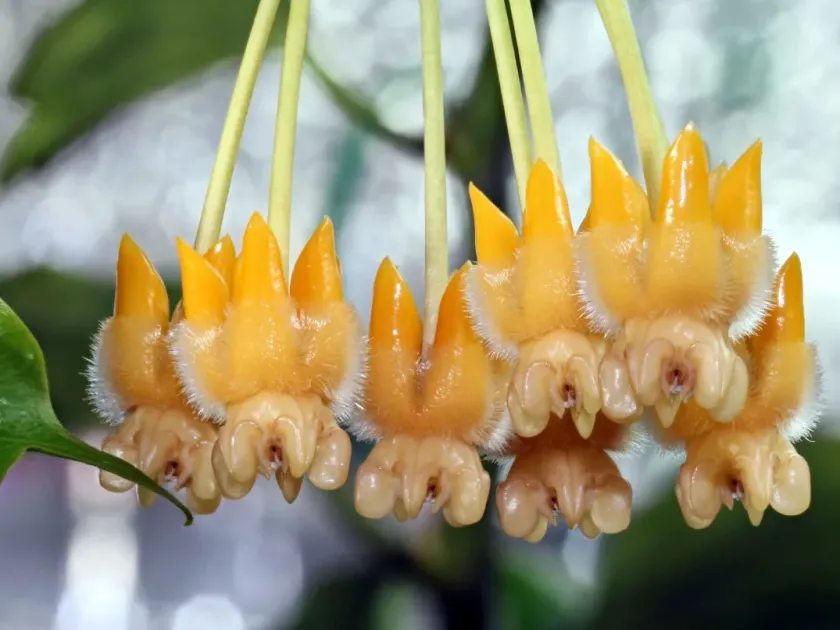
Hoya lasiantha is a species of flowering plant in the Apocynaceae family, native to the tropical regions of Borneo and Indonesia. This climbing epiphyte is prized for its unique, fringed, orange-yellow blooms.
This species thrives in high humidity and warm temperatures. It requires a stable environment with temperatures between 22°C and 28°C to maintain vigorous growth and prevent stress.
Lighting should be bright but filtered. Hoya lasiantha is susceptible to leaf scorch if exposed to direct intense sunlight, especially during the summer months in tropical or subtropical climates.
The potting medium must be airy and fast-draining. A typical mix consists of orchid bark, perlite, and coconut husk chunks to mimic the epiphytic conditions of its natural rainforest habitat.
Watering should be consistent but cautious. Allow the upper third of the substrate to dry out between waterings to ensure adequate aeration of the roots and avoid fungal rot caused by stagnation.
Main diseases and pests
The most common pests affecting this plant are mealybugs and spider mites. These pests thrive in dry environments and can quickly colonize the succulent-like foliage if left unchecked.
Root rot is a major threat caused by overwatering or poor drainage. It presents as yellowing leaves and a softening of the stem, often leading to rapid decline if not addressed early.
Regular inspection of the leaf axils is essential for early detection of mealybugs. If found, a cotton swab dipped in isopropyl alcohol is a common manual method for removal.
Fungal infections can be minimized by avoiding wetting the foliage directly and ensuring good air circulation around the plant, which is vital for maintaining plant hygiene.
In cases of severe infestation, use insecticidal soaps or systemic pesticides suitable for greenhouse plants to prevent further damage to the vegetative parts.