
Hoya lacunosa
Hoya lacunosa
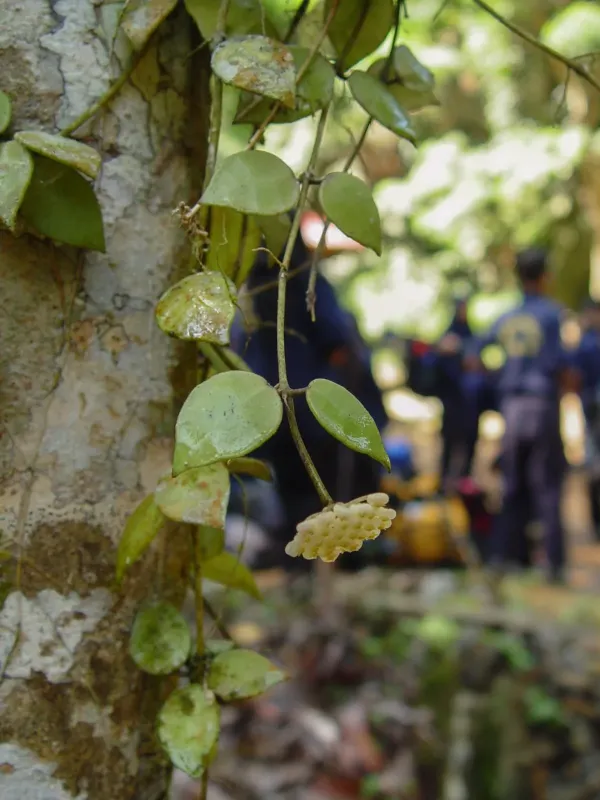
Description
Growing requirements
Hoya lacunosa is a perennial evergreen epiphytic vine belonging to the Apocynaceae family. Native to the tropical regions of Southeast Asia, this species typically grows on tree trunks in its natural forest habitat.
To cultivate this plant successfully, one must provide bright, indirect light. While it tolerates some shade, sufficient light is crucial for the plant to produce its characteristic fragrant, umbel-shaped flower clusters.
The ideal temperature range for this crop is between +20°C and +25°C. As a tropical species, it thrives in environments with high ambient humidity and stable thermal conditions throughout the growing season.
The growing medium must be highly porous and well-draining. A typical agricultural substrate for Hoya involves a mixture of orchid bark, peat moss, and perlite to replicate the epiphyte's natural environment on tree bark.
Irrigation should be managed carefully, allowing the top layer of the substrate to dry out between watering sessions. Over-saturation can lead to oxygen deprivation for the roots, resulting in rapid plant decay.
Main diseases and pests
The primary pests affecting Hoya lacunosa are mealybugs and spider mites. These insects thrive in dry environments and can quickly infest stems and foliage if not controlled with appropriate systemic insecticides or oils.
Fungal issues, such as root rot, are the most significant threats to plant health, usually stemming from improper drainage or excessive watering. Maintaining a sterile growing environment is essential for prevention.