
Hoya hybrids
Hoya hybrids
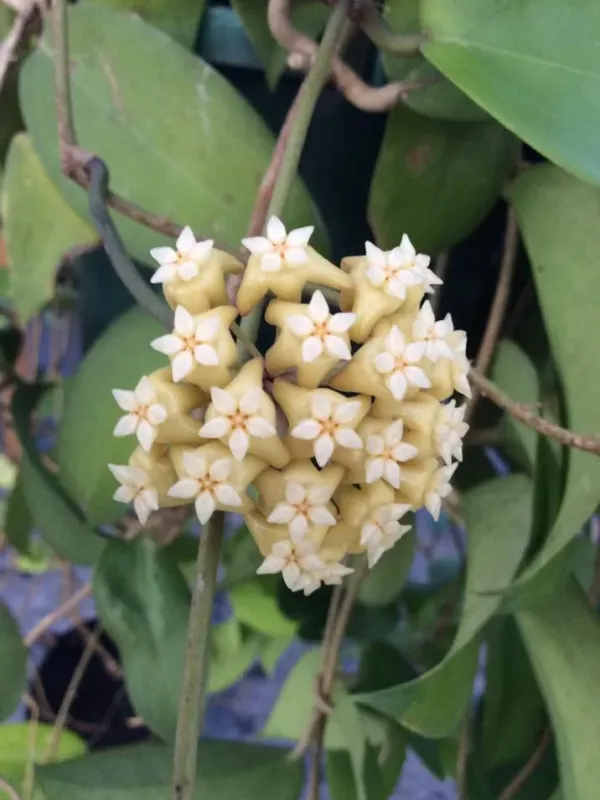
Description
Growing requirements
Hoya hybrids belong to the Apocynaceae family and are popular ornamental vines derived from various tropical species. As epiphytes, they naturally grow on trees, requiring specific substrates to mimic their native environment.
The root system of these plants is highly sensitive to hypoxia. Therefore, it is essential to use a coarse potting mix consisting of orchid bark, perlite, and coconut husk chips to ensure optimal aeration and drainage.
Light intensity is a critical factor for the vigor and floral production of Hoya hybrids. They thrive in bright, filtered light; insufficient light leads to etiolated, leggy growth and a complete failure to initiate flower buds.
Temperature management should mimic tropical climates, ideally between 18°C and 25°C. Exposure to sudden drops below 15°C can cause leaf drop and shock the plant, which often results in stalled growth for several months.
Irrigation must follow a cyclic pattern of wetting and drying. During the growing season, plants should be fed with a balanced, water-soluble fertilizer specifically formulated for epiphytic foliage to support leaf development.
Main diseases and pests
Mealybugs are the most persistent pests found on Hoya hybrids. They congregate in leaf axils and on the undersides of leaves, causing structural damage and stunted growth due to their sap-sucking activity.
Spider mites often attack plants in low-humidity environments, manifesting as stippling on the leaves. Regular misting and proper air circulation are key preventative measures against these microscopic infestations.
Root rot is the primary physiological threat caused by overwatering or poor drainage. This condition quickly leads to the decay of the root system, which can be fatal if not corrected by repotting into fresh medium.
Fungal leaf spot diseases may occur when water remains on the leaves for prolonged periods in stagnant air. Proper ventilation and avoiding overhead irrigation are recommended to mitigate this risk.
Scale insects can also colonize the stems, creating hard, protective bumps that are difficult to remove. Mechanical control followed by systemic insecticidal treatment is usually required to clear heavy infestations.