
Hoya davidcummingii
Hoya davidcummingii
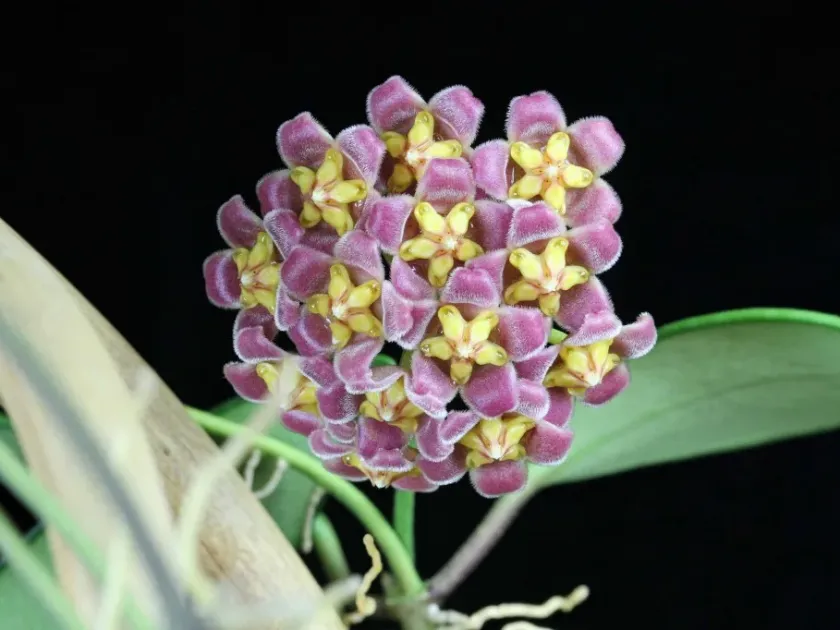
Description
Growing requirements
Hoya davidcummingii belongs to the Apocynaceae family and is recognized for its elegant vining habit and fragrant blooms. Native to the Philippines, this species thrives as an epiphyte in tropical conditions.
Environmental conditions require a warm climate with temperatures typically between 20°C and 25°C. Exposure to sudden cold drafts or temperatures below 15°C must be avoided to prevent stress and leaf drop.
Soil requirements focus on high aeration and rapid drainage. An ideal growing medium consists of orchid bark, perlite, and a small portion of peat moss, which mimics the natural forest canopy environment.
Lighting should be bright but filtered to prevent scorching the delicate foliage. An east or west-facing window usually provides the optimal light intensity for consistent growth and flowering during the season.
Watering practices are essential for this cultivar. While it enjoys a consistent moisture level, it is critical to allow the substrate to dry out slightly between waterings to prevent the development of root issues.
Main diseases and pests
The primary pests affecting Hoya davidcummingii are mealybugs and spider mites. These insects thrive in dry indoor environments and can rapidly weaken the plant by feeding on its sap.
Fungal pathogens often appear when the root zone is chronically overwatered. Symptoms include yellowing leaves, soft stems, and a failure to thrive even under proper light conditions.
To control pest populations, a routine check of the underside of leaves and vine internodes is advised. Early detection significantly reduces the need for aggressive chemical intervention.
Managing the surrounding humidity helps in preventing spider mite outbreaks. Regularly misting the plant or using a pebble tray can create a microclimate that discourages these arachnids.
Sanitation is key in disease management; always ensure tools are sterilized before pruning, and avoid reusing substrate from plants that showed signs of root rot or decay.