
Hoya cumingiana
Hoya cumingiana
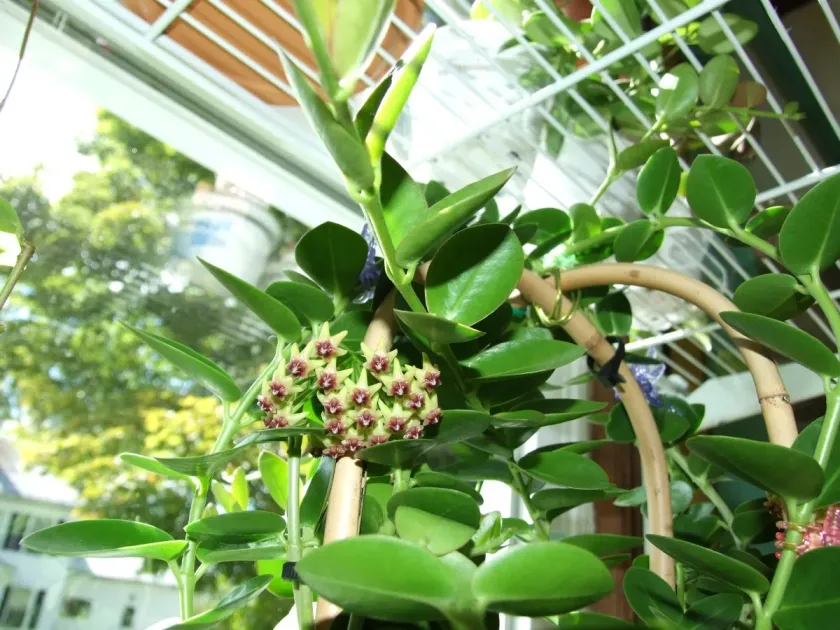
Description
Growing requirements
Hoya cumingiana is an attractive evergreen vine belonging to the Apocynaceae family. Native to the tropical forests of the Philippines, this species is well-adapted to high humidity environments and thrives as an epiphyte in its natural habitat.
In terms of climate, it requires warm conditions with temperatures consistently between +20°C and +26°C. It is highly sensitive to cold air currents and temperature fluctuations, which can cause significant stress to the foliage and inhibit blooming.
The substrate must be highly porous and well-draining to prevent root asphyxiation. A mixture consisting of orchid bark, perlite, coconut husk chips, and a small amount of charcoal is ideal for providing the necessary aeration and moisture balance.
Providing bright, indirect light is essential for the healthy growth and flowering of Hoya cumingiana. While it appreciates high light levels, direct sunlight during the peak of the day should be filtered to avoid scorching the delicate leaves.
Watering should be managed based on the drying cycle of the potting medium. Allow the substrate to dry out partially between waterings, and maintain a humidity level of at least 60% to support the plant's metabolic processes and prevent leaf desiccation.
Main diseases and pests
Common pests associated with this plant include mealybugs, which tend to congregate in leaf axils, and spider mites, which thrive in low-humidity conditions. Regular inspections and mild insecticidal treatments are recommended to prevent infestations.
Root rot is the most frequent pathological issue resulting from overwatering or inadequate soil aeration. To prevent this, ensure that the pot has proper drainage holes and avoid leaving the plant in standing water, especially during winter dormancy.