
Hoya chunii
Hoya chunii
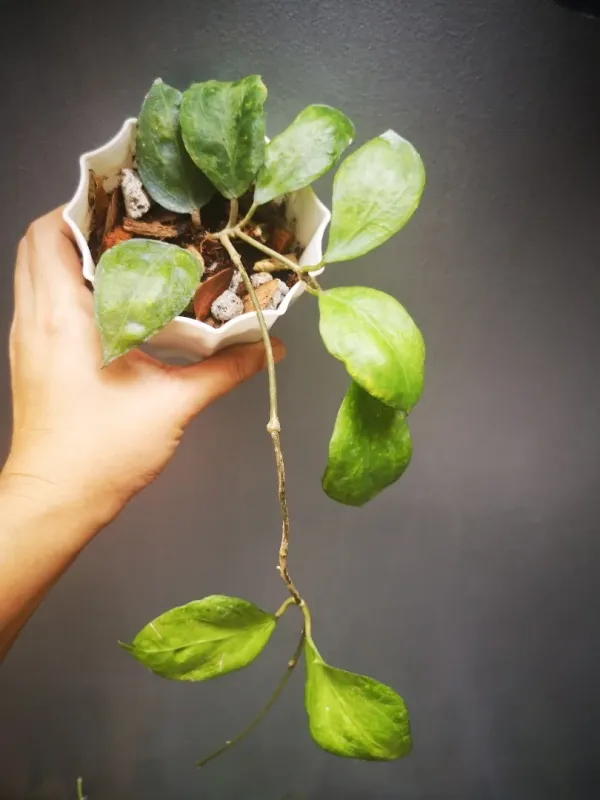
Description
Growing requirements
Hoya chunii is a distinct epiphytic vine belonging to the Apocynaceae family. Native to the tropical regions of Southeast Asia, specifically mountainous areas, it has adapted to grow on trees and rocky crevices where humidity is consistently high.
In terms of light requirements, this species thrives in bright, filtered light. Exposure to direct noon sunlight can lead to leaf scorching, while insufficient light will cause the vine to stretch and lose its compact, attractive growth habit.
The ideal growing temperature ranges between 20°C and 26°C. It is sensitive to rapid thermal shifts, which can lead to leaf drop or bud blast. Consistent warmth is essential during the active growing season to ensure healthy development.
A well-aerated, chunky substrate is critical for the success of Hoya chunii. A mix containing orchid bark, perlite, coco coir, and horticultural charcoal mimics its natural epiphytic habitat, allowing the roots to breathe and preventing waterlogging.
Watering should be managed carefully. It is best to allow the top half of the potting medium to dry out completely before irrigating again. In the winter months, growth slows down, and watering frequency should be reduced significantly to reflect the reduced metabolic activity.
Main diseases and pests
Mealybugs are the most common pest problem for Hoya chunii. They tend to congregate in the tight spaces between leaf nodes and along the stem, where they feed on the sap and weaken the overall plant vitality.
Spider mites are another significant threat, particularly in environments with low humidity. They can quickly damage the foliage by piercing the surface cells, resulting in a stippled, mottled appearance that is irreversible.
Effective management involves utilizing systemic insecticides or neem oil solutions. Regular monitoring of the foliage, especially the undersides of the leaves, is essential to catch infestations before they spread to other plants in the collection.
Root rot is primarily a physiological disorder caused by excessive watering or poor drainage within the container. If the roots remain constantly wet, they will lose their ability to take up nutrients, leading to rapid yellowing and eventual collapse.
Maintaining good airflow around the foliage and ensuring the pots have adequate drainage holes are the best preventive measures. Healthy plants that receive correct light and ventilation are significantly more resistant to both pests and fungal diseases.