
Hoya camphorifolia
Hoya camphorifolia
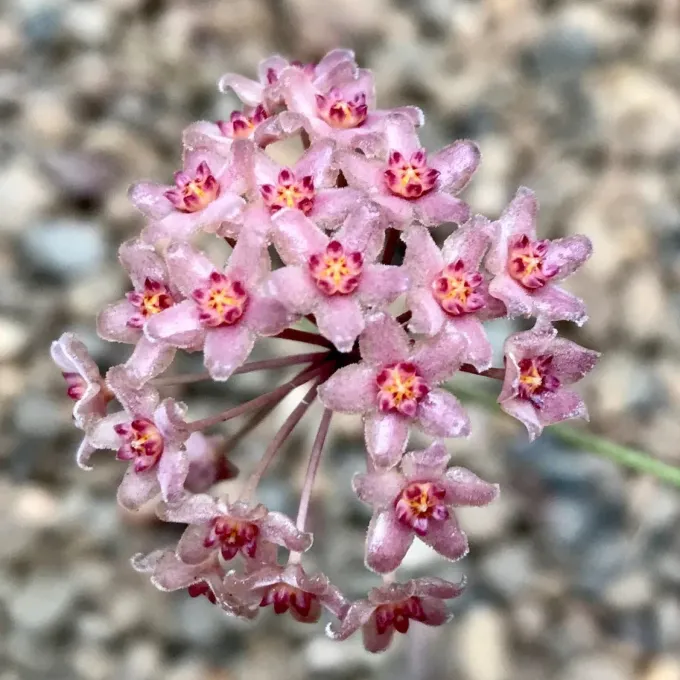
Description
Growing requirements
Hoya camphorifolia is a perennial evergreen vine that belongs to the Apocynaceae family. This species is native to the tropical regions of the Philippines, where it typically grows as an epiphyte, climbing trees in dense forest environments.
The plant thrives in bright, indirect light conditions. While it requires significant light to bloom, direct exposure to harsh sun rays should be avoided to prevent leaf scorching and excessive water loss through the foliage.
For cultivation, a well-draining, airy substrate is crucial. A mix consisting of orchid bark, perlite, and high-quality coco coir mimics its natural habitat, allowing the roots to breathe and preventing the risks associated with waterlogging.
Optimal growth is achieved at temperatures between 22 and 28 degrees Celsius. As a tropical species, it is sensitive to cold drafts and rapid temperature fluctuations, which can trigger leaf drop and stunt overall development.
Watering should be done carefully, allowing the growing medium to partially dry out between sessions. Maintaining moderate to high air humidity, especially during warmer months, helps the plant maintain its lush, healthy appearance.
Main diseases and pests
Common pests affecting Hoya camphorifolia include mealybugs and spider mites. These pests thrive in dry environments and often hide in the leaf axils or on the underside of the leaves, making early detection vital for plant survival.
Root rot is the most common physiological disorder, usually caused by overwatering or using a heavy, non-porous soil mix. This condition is difficult to reverse once the damage has reached the main root system.
Effective pest management involves using systemic insecticides or horticultural soaps. Regular monitoring and physical removal of visible pests can significantly reduce the risk of large-scale infestations within a collection.
Fungal infections can occur if the plant is kept in poor light with high moisture levels. Improving air circulation around the plant is one of the most effective ways to mitigate the risk of fungal spread and mildew development.
When transplanting or treating a sick plant, ensure that all equipment is sanitized. If roots have been damaged by rot, trim the affected parts and use a rooting hormone or fungicide before re-potting in fresh, sterile substrate.