
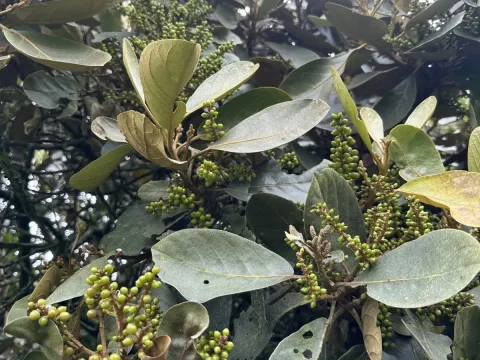
Hieronyma
Hieronyma
The genus Hieronyma, often spelled Hyeronima, belongs to the Phyllanthaceae family. These are evergreen trees that often reach significant canopy heights in their natural tropical habitats.
What the section contains


Hieronyma
The distribution of this species primarily covers Central and South America, as well as the Caribbean islands. It thrives in diverse tropical ecosystems, ranging from lowland rainforests to mountain slopes.
Climate requirements for this plant are strictly tropical. It requires consistent year-round warmth, with no tolerance for frost or prolonged cold snaps, which makes it unsuitable for outdoor cultivation in temperate zones.
The soil preference includes deep, well-draining substrates that provide adequate moisture without waterlogging. They perform best in soils that are slightly acidic to neutral in pH levels.
A typical cultivation strategy involves site preparation that allows for deep root development. In plantation settings, management practices focus on ensuring that saplings receive enough sunlight and minimal competition from weeds during their establishment phase.
The primary economic use of Hieronyma is its timber. The wood is highly regarded for its physical properties, including high density, strength, and remarkable natural resistance to decay and insects.
Beyond timber, the bark of certain species has been historically utilized for its high tannin content. This substance has been extracted for use in the leather industry to treat and preserve hides.
The fruits produced by the tree are small drupes. While not a major commercial crop for human consumption, they provide a vital food resource for wild fauna, birds, and pollinators, aiding forest restoration projects.
In landscaping, these trees are selected for their dense, glossy foliage. They are effective in providing shade and acting as windbreaks in large estates or urban green spaces in suitable climates.
Optimizing yield requires careful selection of tree density and pruning protocols to ensure the development of straight, defect-free trunks, which increases the market value of the harvested timber.
The crop can be susceptible to various fungal pathogens that thrive in high-humidity tropical conditions. Leaf spot diseases are common and can impair photosynthesis if not managed early.
Insects that target the cambium and wood can pose a threat to younger trees. Integrated pest management strategies are generally implemented to monitor and control the population of these wood-boring insects.
Root system health is vital; excessive moisture or poor soil structure can lead to root rot. Proper site selection and drainage management are the most effective preventative measures against these threats.
Competition from invasive plant species can be a major issue in the early years of a plantation. Regular weeding and clearing around the base of the trees are essential to maintain vigor.
Biosecurity measures, such as monitoring nursery stock and controlling the movement of wood products between regions, help to mitigate the risk of introducing new pests or diseases into stable populations.