
Stern's Hellebore
Helleborus x sternii Turrill
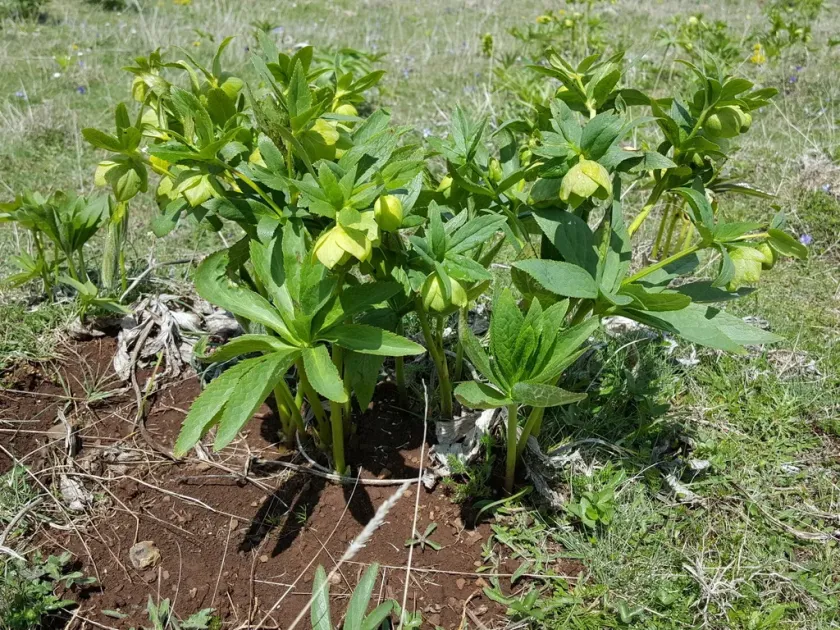
Description
Growing requirements
Stern's Hellebore (Helleborus × sternii) is a hybrid perennial belonging to the Ranunculaceae family. It is a cross between Helleborus argutifolius and Helleborus lividus, valued in horticulture for its robust constitution and distinctive evergreen foliage.
The plant originates from Mediterranean climates and has adapted well to garden conditions worldwide. It thrives in well-drained, alkaline to neutral soils, as poor drainage is the primary cause of crown and root rot, which can prove fatal to the plant.
Regarding site requirements, this hellebore prefers partial shade. While it can tolerate some sun, it performs best when protected from harsh midday rays, which may scorch its leathery, serrated leaves and diminish the vibrancy of its unique green-tinged, pinkish flowers.
Cultural practices include providing mulch to keep the roots cool and moist, especially during hot summer months. In colder climates, a thick layer of organic mulch serves a dual purpose: protecting the root zone from deep freezes and suppressing competing weeds.
Its primary use is in ornamental landscaping. Because it is a winter-blooming perennial, it provides essential color in the garden during late winter and early spring, making it a highly desirable choice for woodland gardens and shaded borders.
Main diseases and pests
The most common fungal pathogen affecting this species is leaf spot (Coniothyrium hellebori), which manifests as dark, spreading lesions on the foliage. It typically occurs in environments with poor air circulation or excessive moisture around the crown of the plant.
Botrytis blight, or gray mold, represents a significant risk during wet spring seasons. It attacks the stems and flowers, creating a fuzzy, grayish-brown decay that can quickly spread to affect the entire plant if left unmanaged.
Pest pressures are generally low but significant if neglected. Aphids often congregate on tender new growth and developing flower buds, while spider mites may thrive in drier conditions, causing the foliage to lose its healthy luster and vigor.
Cultural management is the first line of defense. Gardeners should prune away old, diseased, or dead leaves in late winter before the new growth emerges to reduce the spore load in the garden and improve airflow around the emerging flower stems.
Chemical intervention should be considered only when cultural practices are insufficient. Since all parts of Helleborus are toxic if ingested and can cause skin irritation, appropriate personal protective equipment should be worn during all maintenance tasks.