
Helleborus nigercors
Helleborus x hybridus hort. ex Voss x Helleborus x nigercors J. T. Wall
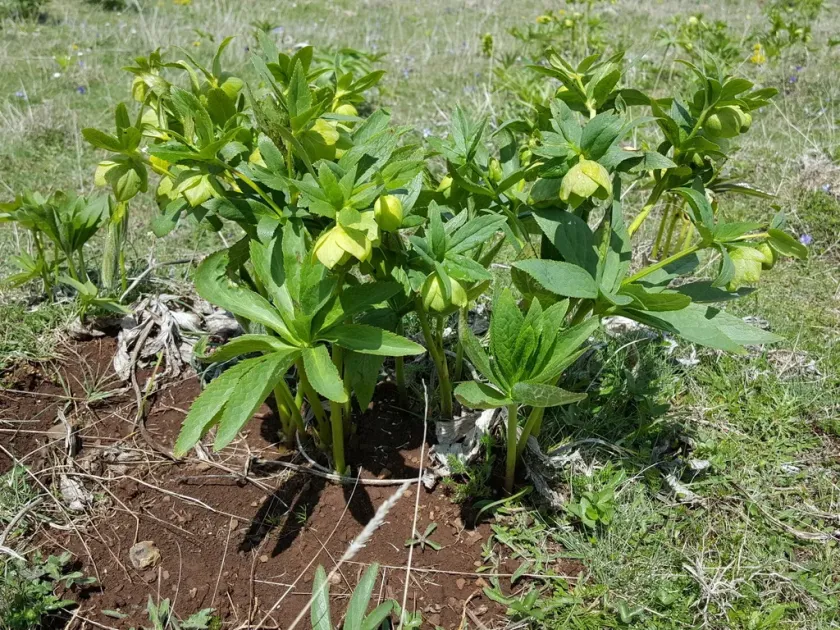
Description
Growing requirements
The hybrid Helleborus nigercors (Helleborus x nigercors) belongs to the Ranunculaceae family. It is a striking perennial resulting from the crossbreeding of two distinct species, combining the hardiness and the early blooming traits of its ancestors.
The plant thrives in partial to full shade, preferring locations sheltered from harsh sunlight. It is an ideal candidate for woodland gardens where the soil remains cool and moist, mimicking its natural habitat requirements.
Proper soil management is critical for this species; it demands nutrient-rich, well-draining soil that is neutral or slightly alkaline. Incorporating organic matter, such as leaf mold or well-rotted compost, provides the necessary nutrients for healthy foliage development.
In terms of agricultural practice, mulching is highly recommended to regulate soil temperature and retain moisture. During periods of drought, supplemental irrigation is necessary to maintain the plant's vigor, though waterlogging must be avoided.
As a landscape plant, this hybrid is valued for its evergreen foliage and elegant flowers. It is frequently used in mixed perennial borders, as a ground cover in shady areas, or as a focal point in early-spring flower arrangements.
Main diseases and pests
Fungal leaf spot is the most common health issue for Helleborus nigercors. It manifests as dark, irregular spots on the foliage, often appearing after periods of high humidity, necessitating the removal and destruction of affected plant tissue.
Botrytis blight (gray mold) can affect the flowers and stems if air circulation is poor or if humidity levels remain high for extended periods. Promoting good spacing between individual plants is a key preventive measure.
Aphids are frequent pests that infest the tender buds and young leaves. Regular inspection during the spring months allows for early intervention with mild insecticidal soaps before a significant infestation occurs.
Snails and slugs pose a persistent threat to the succulent growth of the plant. Gardeners often use organic barriers or traps around the base of the plant to protect new growth from being consumed during the wet spring season.
Root rot caused by poor soil drainage can lead to a sudden decline in plant health. Ensuring the planting site has excellent drainage, perhaps by mounding the soil, is a primary strategy to keep the root system healthy and resilient.