
Hellebore
Helleborus niger x Helleborus x hybridus
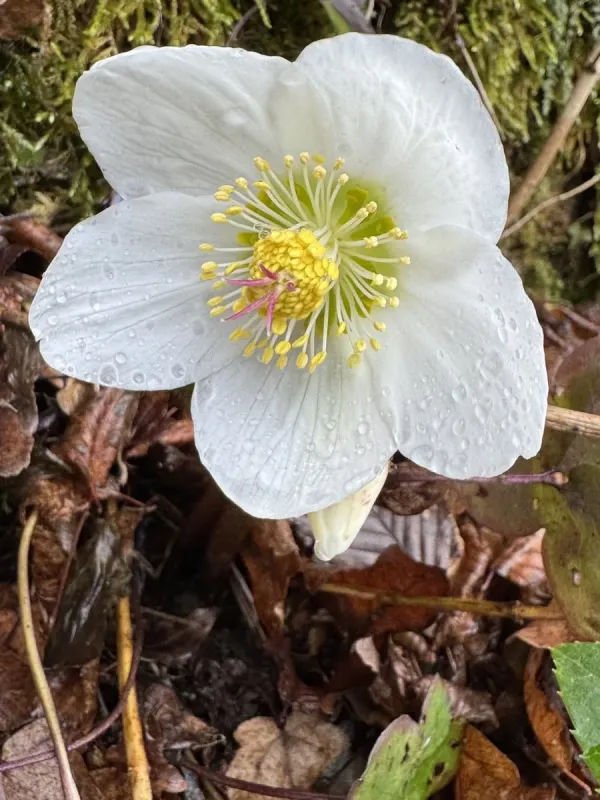
Description
Sowing dates
The Hellebore is a perennial herbaceous plant belonging to the Ranunculaceae family, which is typically propagated either vegetatively or by seeds in agricultural settings.
Sowing seeds is recommended immediately after harvest into open ground or seed trays, as they lose their viability quickly if allowed to dry out.
Stratification of the seeds is a mandatory stage, as it mimics natural seasonal cycles and promotes uniform germination of the seedlings during the spring.
When propagating vegetatively, dividing the bush is performed either in early spring before growth begins or in late summer when the plant is dormant.
It is important to note that the culture develops slowly, so when using the seed propagation method, the first flowering usually occurs in the third or fourth year.
Growing requirements
Hellebores prefer partially shaded areas protected from direct sunlight, which mimics their natural woodland habitat conditions.
The plant has moderate soil requirements: optimal growth is achieved in fertile, loose, moisture-retentive substrates with a neutral to slightly alkaline pH.
The crop is extremely sensitive to waterlogging, therefore in areas with heavy clay soils, the organization of a high-quality drainage layer is mandatory.
In regions with harsh winters, adult plants show sufficient frost resistance, although young specimens may require light covering with spruce branches.
Watering must be regular, especially during drought periods, but excess moisture must be avoided to prevent rotting of the root system.
Main diseases and pests
The most dangerous disease affecting Hellebore is leaf spot caused by fungi, which manifests as dark patches on the leaf blades.
In waterlogged soil conditions, the plant is prone to developing root rots, which can lead to the complete destruction of the bush in a short period.
Among pests, the greatest damage is caused by snails and slugs, which feed on young shoots and ornamental parts of the plant during the spring.
Aphid infestations are also possible, which suck sap from the tissues, causing leaf deformation and weakening the overall immunity of the perennial.
Disease prevention consists of adhering to the irrigation regime, timely sanitary pruning of dead leaves, and ensuring good air circulation around the plants.
Harvesting
The economic use of Hellebore is primarily based on its high ornamental value; therefore, the agronomist's main task is to maintain the plant's appearance.
On an industrial scale, Hellebore cultivation is focused on producing planting material for landscape design and the ornamental gardening sector.
Seed collection is performed at full maturity when the pods begin to dry, requiring monitoring to prevent unwanted self-seeding in the growing area.
In pharmaceutical and traditional medicine, parts of the plant may be used limitedly, as the Hellebore is a poisonous crop requiring careful handling.
For decorative purposes, spent flower stalks are pruned after flowering ends, allowing the plant to redirect energy toward root and foliage development.