
Helichrysum selago
Helichrysum selago
Description
Growing requirements
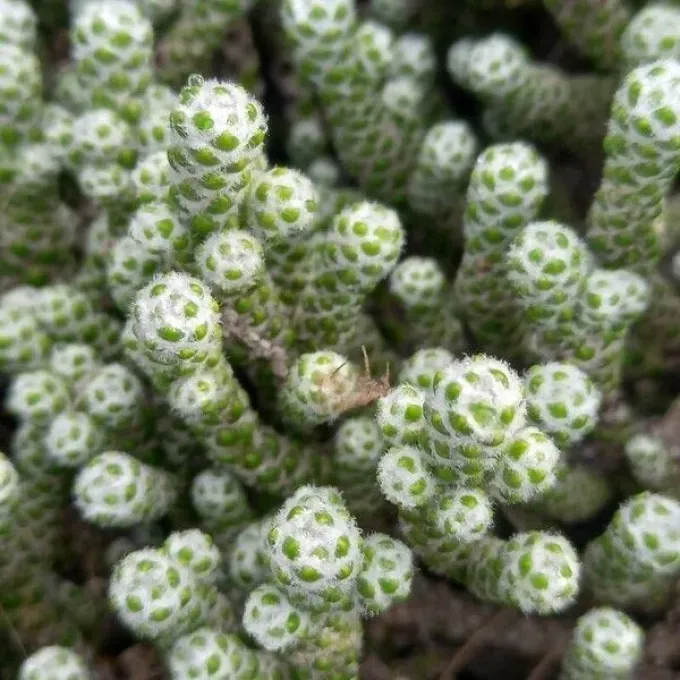
Helichrysum selago is a perennial shrub belonging to the Asteraceae family. Known for its distinct appearance, it features tightly packed, scale-like leaves that cover the stems, giving it a textural resemblance to moss or clubmoss species.
Native to the mountainous regions of New Zealand, this plant has adapted to harsh, alpine conditions. In horticultural practices, it is highly valued for rock gardens and alpine beds due to its evergreen nature and slow-growing, compact habit.
The primary soil requirement for Helichrysum selago is excellent drainage. The plant thrives in gritty, sandy, or rocky soils, as it is highly susceptible to root decay if the substrate retains excessive moisture or lacks proper aeration.
It prefers full sun exposure to maintain its compact growth form and prevent etiolation. While it is hardy, the plant requires protection from severe frost-wind combinations and excessive winter moisture, which are common causes of decline in lowland gardens.
Maintenance involves very little watering once established. As a xerophytic plant, it should be irrigated only during extended dry spells, ensuring that water is applied to the base and not over the foliage, which can trap moisture and cause rot.
Main diseases and pests
Fungal pathogens associated with damp environments are the most significant threat to the health of Helichrysum selago. Root rot is the most common cause of plant failure, particularly in regions with high humidity and poor soil structure.
Insect pests are generally uncommon, as the plant's dense foliage is not easily penetrated by most common garden insects. However, red spider mites may occur in protected environments, such as greenhouses, where air circulation is restricted.
Powdery mildew can infect the plants if there is insufficient airflow around the shrubs. Gardeners should ensure that the spacing between plants is adequate to allow for natural drying of the foliage after rainfall or dew.
Mechanical damage to the base of the stems should be avoided, as it allows opportunistic fungi to enter the vascular system. Using a layer of fine gravel mulch is recommended to prevent direct soil-to-stem contact and keep the crown dry.
Winter protection is necessary in temperate climates, specifically shielding the plant from wet snow and freezing rain. A breathable cover is usually preferred over heavy materials to avoid trapping humidity near the leaves during the dormant season.