
Helichrysum pomelianum
Helichrysum pomelianum
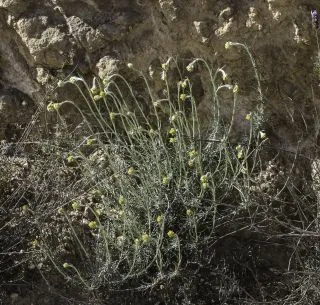
Description
Sowing dates
Sowing of Helichrysum pomelianum is primarily conducted in the spring when the soil warms up to 10–12 degrees Celsius. In temperate climates, a seedling method is preferred to achieve uniform germination.
The seeds are small, so they should be sown at a shallow depth of no more than 0.5–1 cm. Surface sowing requires light rolling to ensure good contact between the seeds and the soil.
When using the seedling method, seeds are sown in trays or cassettes in late February or early March. Pricking out is performed after the first pair of true leaves appears, which promotes the development of a strong root system.
Transplanting hardened seedlings into the field is carried out after the threat of late frosts has passed. The optimal planting density is 40–50 cm between rows, ensuring good air circulation and easier mechanical maintenance.
The crop shows high survival rates in light, well-drained soils, provided the area is free from perennial weeds that could suppress young plants during the first month of growth.
Growing requirements
Helichrysum pomelianum is a perennial herbaceous plant belonging to the Asteraceae family. It has high light requirements and prefers open areas that receive full sunlight throughout the day.
Successful cultivation requires sandy, loamy, or stony soils with a neutral or slightly alkaline pH. The plant is extremely sensitive to waterlogging and poor drainage, which can lead to root system decay.
The crop is adapted to arid conditions and possesses high xerophytic resistance. Optimal soil moisture levels for active growth are 50–60% of field capacity, and short-term drought does not cause significant damage to the harvest.
Fertilization should be moderate. Excess nitrogen promotes excessive green biomass at the expense of floral parts and reduces the concentration of essential oils. Phosphorus-potassium fertilizers are recommended during the budding phase.
The crop is winter-hardy, but in regions with harsh, snowless winters, light mulching is required to protect the root collar from freezing.
Yield
The economic efficiency of growing Helichrysum pomelianum is determined by the yield of dry raw material or the volume of essential oil. Peak productivity occurs in the second or third year of the plant's life.
The average yield of flower heads, when following best agricultural practices, ranges from 0.8 to 1.5 tons per hectare in dry weight. Exact figures depend on soil quality, plant density, and solar radiation intensity during the season.
The crop is used primarily in pharmacology and cosmetology. The flower heads contain specific flavonoids and essential oils that possess antispasmodic, antibacterial, and choleretic properties.
The product is valued in the market for its high content of biologically active compounds. Stable income is ensured by processing the raw material locally to preserve volatile aromatic components.
Through the selection of high-yield lines, it is possible to increase oil output by 15–20% without significantly changing the cultivation technology, making it a promising crop for commercial farms.
Main diseases and pests
Helichrysum pomelianum is relatively resistant to most pathogens, but it is susceptible to fungal infections under high humidity. The most dangerous is root rot, which occurs if soil drainage is compromised.
Powdery mildew can affect the leaves during periods of significant temperature fluctuations. Prevention requires ensuring good ventilation and avoiding overcrowded planting, which encourages moisture accumulation.
Among pests, aphids and various species of plant-eating mites cause the most damage. They feed on the cell sap of young shoots, leading to leaf deformation and a decrease in the plant's overall vitality.
Biological products are used to control pest populations, allowing for the preservation of organic quality in the raw material. Chemical insecticides are used only as a last resort, strictly observing pre-harvest intervals.
Biological control includes the use of entomophages, which effectively regulate the population of harmful insects, minimizing the need for human intervention in the plantation's agroecosystem.
Harvesting
The harvest of Helichrysum pomelianum flower heads is carried out during the phase of mass blooming, when the heads are fully formed but have not yet begun to puff. This is a critical moment for preserving the maximum amount of active compounds.
Harvesting should preferably be done in dry, sunny weather after the dew has evaporated. Wet raw material is prone to rapid spoilage and mold growth, which makes it impossible to obtain a high-quality product.
Cut flower heads are immediately taken for drying in well-ventilated rooms or specialized dryers at temperatures not exceeding 40–45 degrees Celsius. Overheating leads to the loss of valuable essential oils.
After drying, the material is sorted to remove impurities and damaged elements. Quality raw material should retain its natural color and the specific aroma characteristic of the species.
Stored dry products should be kept in paper bags or airtight containers in dry, dark, and cool locations. Under proper storage conditions, the shelf life is up to two years while maintaining pharmacological properties.