
Pallas's everlasting
Helichrysum pallasii
Description
Growing requirements
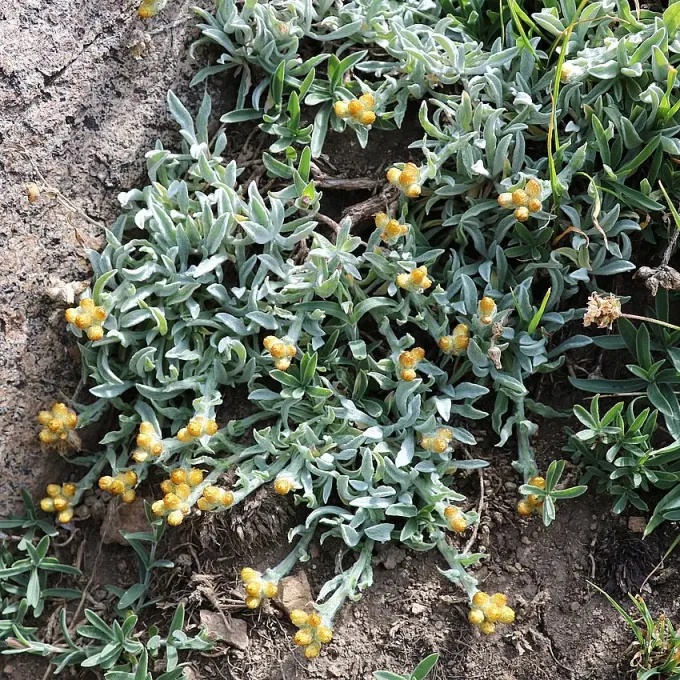
Pallas's everlasting (Helichrysum pallasii) is a perennial herbaceous plant belonging to the Asteraceae family. Known for its distinct silvery foliage, this species is native to specific mountainous regions, thriving in harsh, rocky conditions where other plants struggle to survive.
As a xerophyte, this crop is exceptionally well-adapted to arid environments and intense sunlight. Successful cultivation requires well-drained, porous soils that mimic the natural stony habitat of the species, as stagnant water is the primary cause of plant loss.
The plant grows as a dense, low-mounded shrub, making it highly suitable for rock gardens and xeric landscaping. Its biological adaptation to temperature extremes allows it to withstand both the scorching heat of summer and the cooling effects of high-altitude winds.
Proper sunlight exposure is the most critical factor for the development of its aromatic oils and typical morphological structure. Without full sun, the plant tends to become leggy and loses its characteristic compact appearance and decorative value.
In terms of agricultural utility, Pallas's everlasting is valued primarily in the floriculture industry. The flowers are renowned for their ability to maintain their texture and color long after harvesting, which makes them a premium choice for long-lasting dried floral arrangements.
Main diseases and pests
Root rot is the most common threat to this plant, typically triggered by high humidity or poorly draining soil. To prevent such issues, cultivators should ensure that the base of the plant remains dry and that soil aeration is prioritized during the rainy seasons.
Pests such as aphids and spider mites can infest the foliage, particularly during periods of environmental stress. Regular inspections during the spring and summer months help in detecting early signs of colonization before significant damage occurs to the leaves.
Powdery mildew may develop if the plant is exposed to excessive dampness without sufficient airflow. Improving the ventilation between individual plants and avoiding overhead irrigation methods are essential practices for effective disease control.
Weed competition is particularly challenging during the establishment phase. Since the plant has a sensitive root system, manual weeding is preferred over the application of systemic herbicides which could cause phytotoxicity or permanent growth stunting.
Integrated pest management, involving the use of natural predators or organic oils, is recommended for this crop. Maintaining a clean cultivation site and removing diseased debris at the end of the season significantly reduces the pressure from pathogens for the following year.