
Helichrysum crispum
Helichrysum crispum
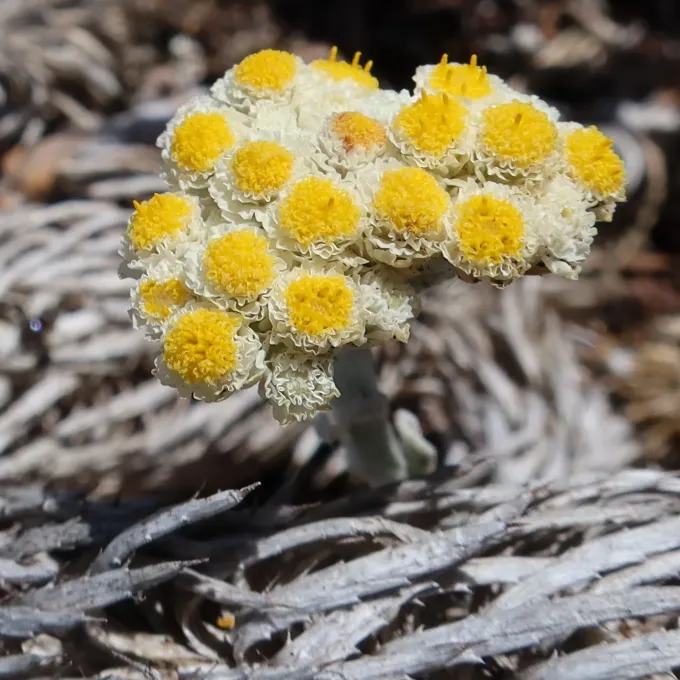
Description
Sowing dates
Propagation of Helichrysum crispum is typically managed through seedling production, starting indoors about six to eight weeks before the last expected frost.
Seeds should be sown in a sterile, light, and well-draining potting medium, pressing them gently into the surface without covering them with too much soil.
Temperature management is key during the germination phase, as the seeds require consistent warmth to break dormancy and emerge successfully.
Once seedlings have developed their first set of true leaves, they should be transplanted into individual pots to encourage stronger root formation.
Hardening off the plants is a necessary step before transferring them to the field to ensure they can withstand outdoor wind and temperature fluctuations.
Growing requirements
As a member of the Asteraceae family, this species thrives in full sun exposure and requires an environment that mimics its natural arid habitats.
Soil structure is critical; Helichrysum crispum performs best in sandy or rocky soils with excellent drainage to prevent root zone suffocation.
The plant demonstrates significant drought tolerance once established, making it suitable for low-input agriculture in warm, Mediterranean-like climates.
Excessive fertilization, particularly with nitrogen, should be avoided as it promotes rapid stem growth at the expense of floral production and hardiness.
Space the plants adequately to ensure good air circulation, which helps maintain plant health and reduces the risk of foliar fungal diseases.
Main diseases and pests
Fungal pathogens are the primary concern, especially in regions with high humidity, where leaves can quickly succumb to powdery mildew infections.
Botrytis, or gray mold, can occur if irrigation management is poor or if the planting site lacks sufficient airflow between individual plants.
Root rot is a major threat in heavy, compacted soils that do not allow for rapid water drainage, leading to the rapid decline of the entire crop.
Aphids and mites may infest the foliage during periods of environmental stress, requiring targeted pest management to protect the flower harvest.
Integrated pest management strategies should be prioritized, focusing on cultural practices before relying on chemical intervention for control.
Harvesting
Harvesting for the dried flower market must take place at the bud stage, just before the petals fully expand to show the inner floral disk.
Cuttings should be performed on a dry afternoon, ensuring that there is absolutely no moisture on the stems, which prevents mold during storage.
The stalks should be bundled loosely to ensure that airflow reaches all parts of the bunch during the drying process in a shaded environment.
Air-drying is the preferred method; hanging bundles upside down in a cool, dark room preserves the structural integrity and vibrancy of the blooms.
Properly cured flowers can retain their ornamental value for years, making them a high-value product for the decorative and craft industries.