
Coral everlasting
Helichrysum coralloides
Description
Growing requirements
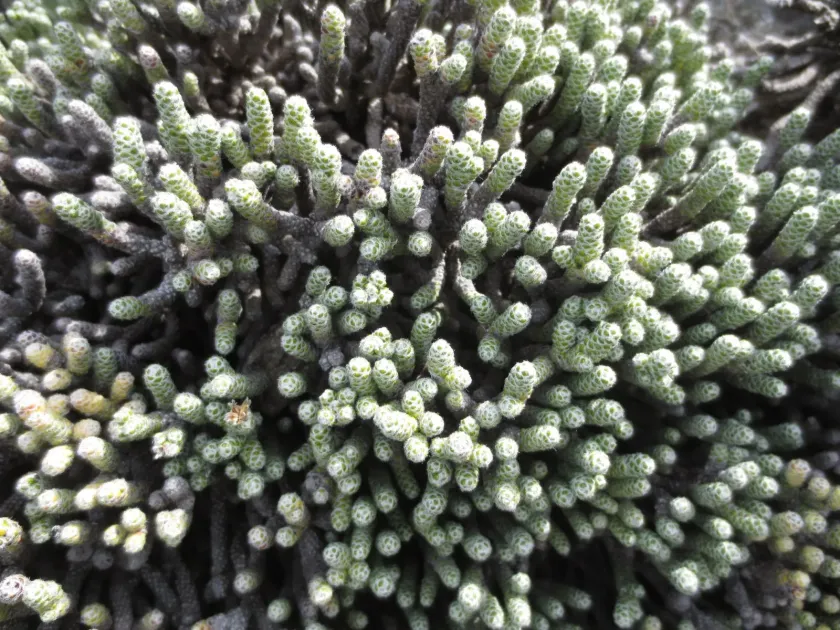
Helichrysum coralloides, commonly known as coral everlasting, is a unique, slow-growing evergreen subshrub belonging to the Asteraceae family. It is endemic to the rocky, mountainous regions of the South Island of New Zealand, where it thrives in extreme, exposed conditions.
The plant features a distinct structural form resembling coral, characterized by dense stems covered in tiny, imbricated leaves. These leaves are densely covered in white, woolly hairs, an evolutionary adaptation to preserve moisture and reflect the harsh alpine sunlight of its natural habitat.
Successful cultivation requires environmental conditions that strictly replicate its native habitat. Excellent drainage is non-negotiable, and the plant performs best in lean, gritty, or rocky soils. It is highly intolerant of waterlogged soil, which often leads to rapid decline.
In landscape design, this species is highly valued for its unique texture and metallic silver foliage. It is primarily used in alpine rock gardens, specialized container displays, and xeriscapes where low water requirements and aesthetic appeal are prioritized.
Agrotechnical management includes selecting a sunny, well-ventilated location with protection against excessive winter humidity. While it can withstand freezing temperatures, the combination of cold and wet conditions is often fatal for established plants.
Main diseases and pests
The most significant threats to Helichrysum coralloides are root and crown rot caused by poor soil drainage or inadequate airflow. These fungal conditions spread rapidly in the dense foliage, making them difficult to detect until the plant has already sustained significant damage.
Pests such as spider mites and mealybugs can occasionally infest the plant, particularly when grown in sheltered greenhouse environments. Routine monitoring of the intricate stem structure is essential for early detection, followed by appropriate acaricide or insecticide applications.