
Violet rockrose
Helianthemum violaceum
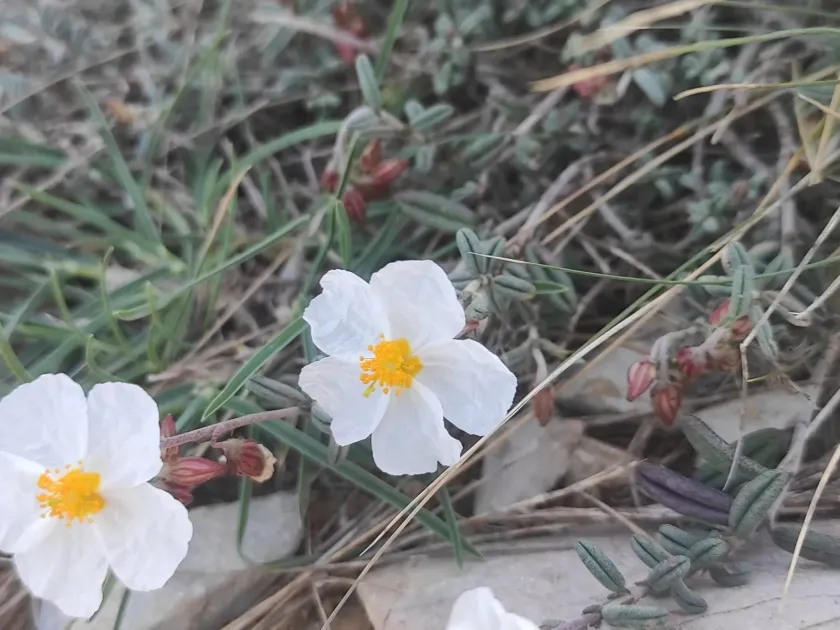
Description
Sowing dates
Sowing of the violet rockrose is primarily carried out in the spring period, once the soil warms up to a temperature of 10–12 degrees Celsius. For seedling production, seeds are sown in trays with a light sandy substrate in March, ensuring moderate moisture.
When sowing directly into the open ground, seeds are planted at a depth of no more than 0.5 cm, as they require access to sunlight for germination. The optimal time for planting in a permanent location is considered to be the end of April or early May.
A vital condition for successful sowing is the preparation of a drainage layer, which prevents moisture stagnation at the roots of young sprouts. The plant handles waterlogging poorly, so it is important to avoid heavy clay soils during the sowing process.
Seedlings usually appear 2–3 weeks after planting at a stable ambient temperature of about 18–20 degrees. Once the first pair of true leaves appears, the plants are pricked out or thinned, leaving a distance of at least 30 cm between specimens.
Violet rockrose also propagates successfully through cuttings, which are taken in late summer after the mass flowering phase ends. This allows for faster development of mature bushes, which are then prepared for the winter period.
Growing requirements
The crop belongs to the Cistaceae family and prefers open, maximally illuminated areas. In the shade, the plant stretches, loses its decorative appeal, and practically stops blooming, making the choice of planting site critical.
The violet rockrose has specific soil requirements: the substrate must be dry, light, and calcareous. Excess moisture and acidic environments are detrimental to the root system of this species.
The plant exhibits high drought resistance, making it an ideal choice for landscaping rock gardens, alpine slides, and dry retaining walls. Watering should be extremely moderate, occurring only during periods of extreme drought.
Climatic adaptation allows the rockrose to withstand short-term temperature drops; however, in severe winters without snow cover, the plant requires light protection with spruce branches or dry leaves.
Agronomic maintenance includes regular pruning after flowering, which stimulates the growth of new lateral shoots and supports a compact bush shape. Without pruning, the plant quickly becomes leggy and loses its attractiveness.
Yield
The commercial use of the violet rockrose is not related to the production of agricultural commodities, as the species is primarily decorative and horticultural. Its value lies in the duration of its flowering period, which spans from late spring to mid-summer.
In landscape construction, the crop is used as a ground cover plant capable of quickly filling voids between stones and preventing soil erosion on slopes. Total biomass per square meter of planting is estimated as moderate.
The plant is an excellent honey producer, attracting a large number of bees and other pollinators to the area during the peak flowering season. This increases the overall biological activity of the residential or garden plot.
The economic efficiency of cultivation is determined by the longevity of this perennial: with proper care, the bush retains its decorative functions in one spot for up to 5–7 years without the need for replanting.
Using rockrose as a border plant allows for the creation of sustainable compositions that do not require significant financial investment in fertilizers or specialized machinery for care.
Main diseases and pests
The main threat to the violet rockrose is fungal infection caused by soil waterlogging, known as root rot. Once infected, the plant wilts rapidly and must be removed from the site immediately to prevent the spread of the pathogen.
Powdery mildew may affect the leaf surface during periods of sharp changes in humidity and temperature. To combat the disease, fungicides based on copper or biological preparations that limit the development of fungal spores are used.
Among pests, aphids and spider mites are the most common, developing actively in hot, dry weather. To prevent pest infestations, it is recommended to maintain proper ventilation of the plantings and avoid overcrowding the plants.
Damage to shoots can also occur due to an excess of nitrogen fertilizers, which make the plant's tissues softer and more attractive to insects. Minimal application doses of fertilizer should be strictly adhered to.
The overall resistance of the species to diseases is considered high, provided there is a proper selection of a well-drained substrate and adherence to an irrigation regime that minimizes the risks of pathogen development.