
White rock-rose
Helianthemum apenninum
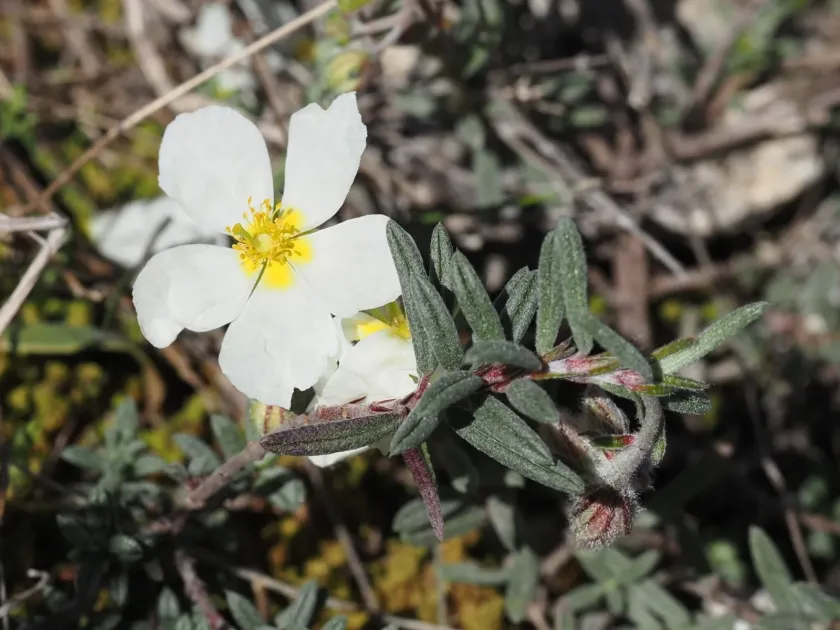
Description
Sowing dates
Sowing Helianthemum apenninum seeds is best performed in early spring. The seeds benefit significantly from a period of cold stratification to break dormancy and ensure uniform germination.
Seeds should be sown in a well-draining, gritty seed-starting mix. Light is essential for successful germination, so the seeds should only be lightly covered with fine substrate.
When starting indoors, maintain a temperature range of 15–20 degrees Celsius. Ensure that the seedlings receive sufficient light immediately after emerging to prevent etiolation.
Transplanting to the permanent location should take place once all danger of hard frost has passed. Care must be taken not to disturb the taproot system during this process.
For direct seeding in the field, ensure the soil is free of weeds, as young seedlings are poor competitors and can easily be outgrown by invasive grasses.
Growing requirements
The white rock-rose, belonging to the Cistaceae family, is a perennial subshrub native to the limestone regions of Central and Southern Europe.
It thrives in full sun and requires exceptionally well-drained, nutrient-poor soil. This plant is a classic choice for rock gardens, banks, and gravel borders where conditions are dry.
Maintenance involves pruning the plants back by about a third after the flowering period. This prevents the woody base from becoming too leggy and encourages a new flush of compact growth.
The plant is highly drought-tolerant once established. Watering should be kept to an absolute minimum, as the species is highly susceptible to root decay in stagnant, wet conditions.
No heavy fertilization is needed; in fact, rich soils often result in weaker, shorter-lived plants that produce fewer flowers and are more susceptible to winter damage.
Main diseases and pests
Root rot is the most serious threat to Helianthemum apenninum. It is almost exclusively caused by heavy, water-retentive soils or excessive rainfall combined with poor drainage.
Powdery mildew may occur if air circulation is poor, particularly during humid summer weather. Proper spacing between plants is essential to manage this risk effectively.
Pests such as spider mites may infest the foliage during prolonged hot and dry periods. If detected, treatment with insecticidal soaps or specific miticides is recommended.
Maintaining a clean cultivation area is vital for disease prevention. Removing dead leaves and debris from the base of the plant helps to reduce the build-up of moisture-related pathogens.
Winter injury can occur if the plant remains waterlogged during freezing temperatures. Providing a layer of grit or sharp sand around the crown can help keep the foliage and base dry.