
Bladder sunrose
Helianthemum vesicarium
Description
Growing requirements
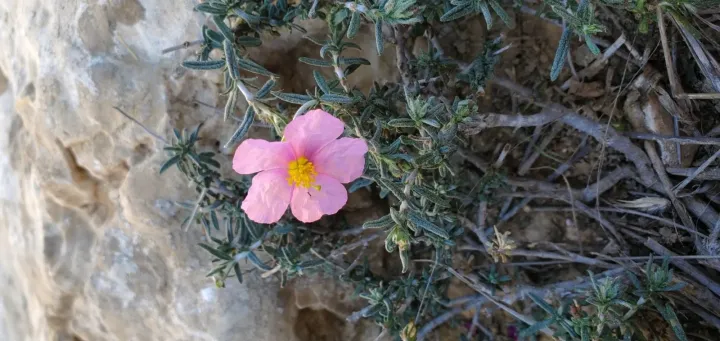
Helianthemum vesicarium, commonly known as the bladder sunrose, is a perennial subshrub belonging to the Cistaceae family. Its natural distribution is focused on arid and semi-arid regions of the Middle East and North Africa, where it has evolved to thrive in harsh, dry climates.
Regarding soil requirements, the plant strictly demands well-drained, porous substrates. Sandy, rocky, or gravelly soils are ideal for the plant's development, as they prevent water accumulation around the roots, which is the primary cause of decay in this species.
Botanically, the plant is characterized by its deep root system and specialized foliage. These features allow it to maintain metabolic activity even during prolonged drought, making it an excellent candidate for xeriscaping and soil stabilization in desert environments.
The culture requires full sun exposure to maintain its compact growth habit and consistent flowering cycles. Inadequate lighting results in leggy growth and increased vulnerability to pathogens, negatively affecting the overall vigor of the individual plants.
Management practices for this crop involve very low maintenance. Fertilizer application should be minimized, as the plant is adapted to nutrient-poor soils. Irrigation should be restricted to the initial establishment phase, after which the plant becomes highly self-sufficient and drought-hardy.