
Helianthemum stipulatum
Helianthemum stipulatum
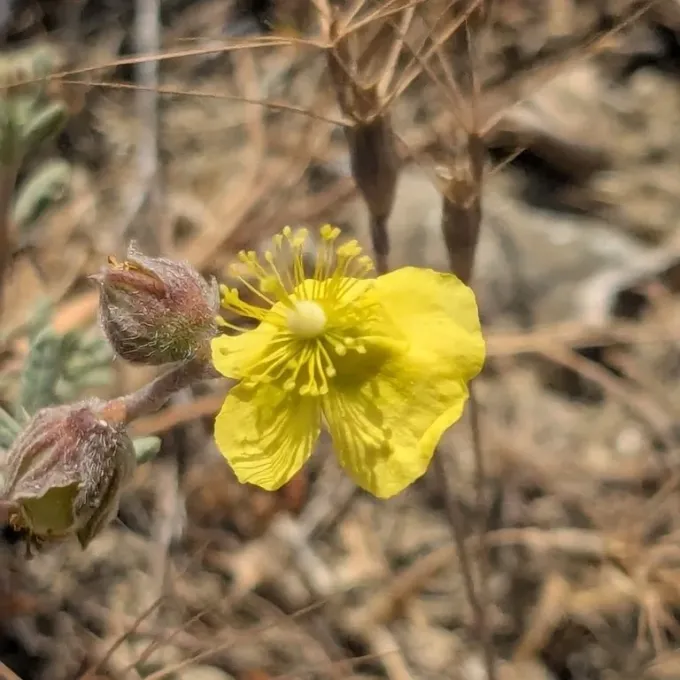
Description
Sowing dates
Helianthemum stipulatum, a member of the Cistaceae family, is typically propagated via seeds or semi-hardwood cuttings. Sowing should take place in early spring, once the danger of severe frost has passed and the soil begins to warm up significantly.
When starting from seeds, it is beneficial to provide a period of cold stratification to break dormancy. Seeds should be sown on the surface of a well-draining seed-starting mix, as they require light to germinate effectively, and covered only by a very thin layer of sand.
Seedlings should be kept in a bright, ventilated area to prevent damping-off diseases. Once they develop their first set of true leaves, they can be transplanted into individual pots to encourage stronger root development before being moved to the final site.
Vegetative propagation using semi-hardwood cuttings taken in mid-summer is the preferred method for maintaining specific plant characteristics. Cuttings should be treated with a rooting hormone and placed in a mixture of sand and peat to ensure optimal moisture levels.
Establishment in the garden requires choosing a site with enough space for the plants to spread, typically spacing them at least 30-40 cm apart. This ensures proper air circulation and prevents overcrowding as the plants mature.
Growing requirements
This species is a quintessential sun-lover and requires a site with full sun exposure throughout the day. Inadequate light levels will lead to leggy, weak plants that fail to produce the vibrant blooms they are known for.
The ideal soil for Helianthemum stipulatum is poor, gritty, and alkaline or neutral in reaction. High fertility is not required; in fact, over-fertilizing can lead to excessive foliage growth and reduced flowering, potentially shortening the plant's lifespan.
Excellent drainage is non-negotiable, as this plant is highly susceptible to root rot if left in waterlogged conditions. Adding gravel or coarse sand to the planting hole is a recommended practice for heavy or clay-based soils.
Drought tolerance is one of its primary characteristics, making it an excellent candidate for xeriscaping or rock gardens. Once established, it requires minimal supplemental irrigation, even in hot summer conditions.
Annual maintenance involves light pruning after the main flowering phase, which encourages a more compact growth habit and potentially a second, lighter flush of flowers. Mulching with inorganic materials like crushed stone helps keep the crown dry.
Main diseases and pests
Fungal diseases, specifically root and crown rot, pose the most significant threat to the health of Helianthemum stipulatum. These are almost always caused by excessive soil moisture and poor drainage in the root zone.
Pests are generally not a major concern, though in rare circumstances, aphids may infest new growth during periods of heat stress. Regular monitoring is sufficient to detect these issues before they cause significant damage to the plant.
Powdery mildew can occur in areas with poor ventilation or high humidity levels. Increasing the distance between plants and ensuring that the planting site remains airy are key management strategies for this issue.
When chemical intervention is required, ensure that fungicides used are specifically labeled for the affected fungus and that they are applied in accordance with regional environmental regulations to protect surrounding flora.
- Ensure rapid drainage to prevent waterlogging.
- Prune after flowering to maintain air circulation.
- Use inorganic mulch to keep stems away from soil moisture.
- Monitor for aphid populations during drought periods.