
Scaly rock-rose
Helianthemum squamatum
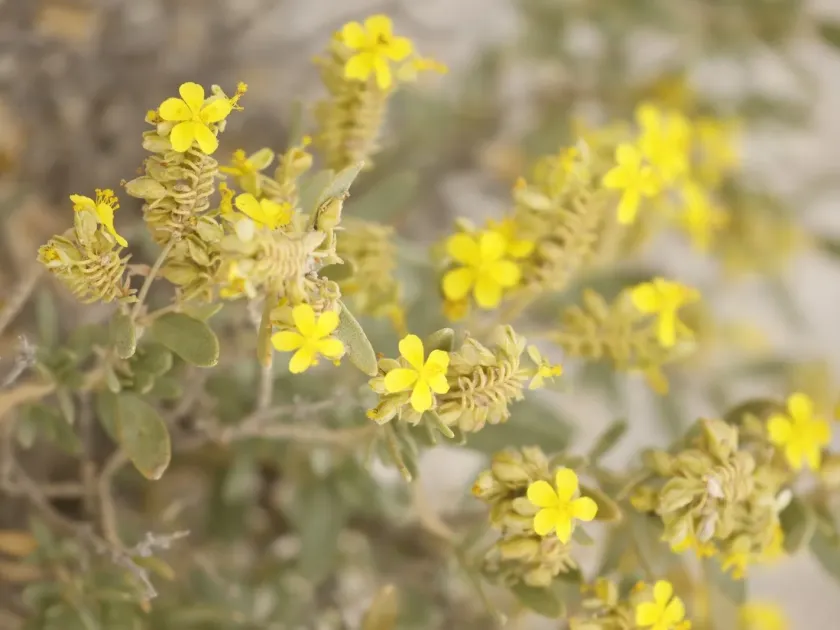
Description
Growing requirements
Scaly rock-rose belongs to the Cistaceae family. This perennial subshrub is native to the Iberian Peninsula, where it has evolved to survive in harsh Mediterranean climatic conditions.
The plant possesses unique botanical adaptations for survival on rocky and arid substrates. Its shoots are covered with small, often scale-like leaves, which assist in minimizing transpiration during periods of intense summer heat.
Successful growth requires well-drained, calcareous or chalky soils. Water stagnation in the root zone is fatal, and therefore, this crop cannot tolerate waterlogged areas or heavy clay soils under any circumstances.
This species is a quintessential heliophyte that demands maximum sunlight throughout the day. Under shaded conditions, the plant loses its compactness, shoots become etiolated, and flowering becomes extremely sparse or ceases entirely.
In terms of agricultural and horticultural use, Helianthemum squamatum is valued as a promising plant for the restoration of degraded lands and for landscaping dry rock gardens. It is highly resistant to extreme temperatures and can thrive for long periods without irrigation.
Main diseases and pests
In its natural habitat, the plant possesses high innate resistance to diseases. The primary threat is the development of root rots, which occur exclusively due to poor cultivation practices, specifically excessive soil moisture.
Among pests, sucking insects like aphids can occasionally pose a threat to the aerial parts of the plant under cultivation, although mass infestations are observed very rarely.
Restricted air circulation due to overcrowding can trigger fungal infections, such as powdery mildew. To prevent this, it is necessary to maintain proper spacing between specimens and avoid dense planting.
When cultivating, it is important to avoid excessive nitrogen fertilization. High nitrogen levels stimulate intense vegetative growth, which lowers the natural winter hardiness and increases the plant's susceptibility to various pathogens.
To maintain shrub health, it is recommended to carry out sanitary pruning after the flowering period. This helps to remove old, dried branches and prevents the accumulation of an infectious environment within the plant's canopy.