
Rush rose
Helianthemum scoparium
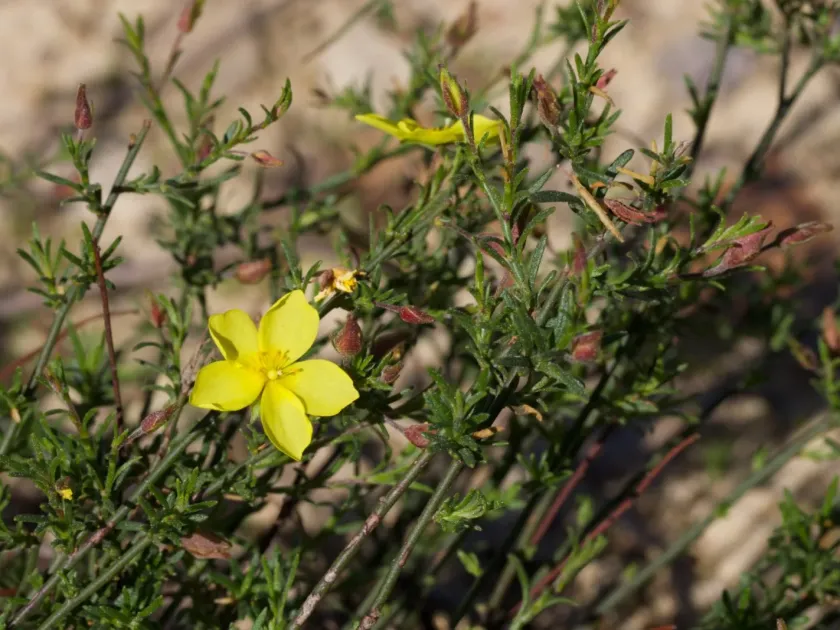
Description
Sowing dates
The sowing of Helianthemum scoparium seeds is typically performed in late autumn or early spring, ensuring that the seeds are placed in a well-draining environment.
Seeds require light for germination, so they should be covered with only a very thin layer of soil or fine grit to facilitate proper light exposure during development.
Propagation through nursery containers is preferred, as this minimizes root disturbance and allows for better monitoring of the delicate seedling growth phase.
Sowing in a greenhouse environment can improve success rates by maintaining a steady temperature range, which prevents the seeds from becoming dormant due to sudden chills.
Once established, the seedlings should be hardened off gradually before being transplanted into their permanent outdoor location during the frost-free season.
Growing requirements
Helianthemum scoparium, a member of the Cistaceae family, is a drought-tolerant subshrub native to regions characterized by arid climates and rocky landscapes.
The plant demands extremely well-draining soil, such as sandy or gravelly loam; it will fail to thrive in dense, heavy soils that retain moisture for long periods.
Full sun is non-negotiable for this species, as it has evolved to harness high levels of solar radiation for its metabolic processes and prolific blooming.
While tolerant of nutrient-poor soils, the plant benefits from a light dressing of compost in early spring, though over-fertilization should be strictly avoided.
Hardiness is a key feature, but the plant remains vulnerable to winter wetness, making elevated or sloped planting sites the most recommended for healthy growth.
Main diseases and pests
Root rot remains the most significant threat to the Rush rose, usually triggered by excessive irrigation or poorly structured, waterlogged garden beds.
Powdery mildew is a common fungal issue that manifests during periods of high humidity and stagnant air, damaging the foliage and reducing plant vigor.
Pests such as aphids and spider mites can infest the plant, particularly when it is grown under stress, necessitating early detection and natural control methods.
Proper airflow is the primary defense against most biological threats, so dense planting should be avoided to ensure that leaves dry quickly after rainfall.
Monitoring for signs of wilting is critical, as this is often the first indicator of root-level pathogen activity that can lead to permanent plant loss.