
Willow-leaved rockrose
Helianthemum salicifolium
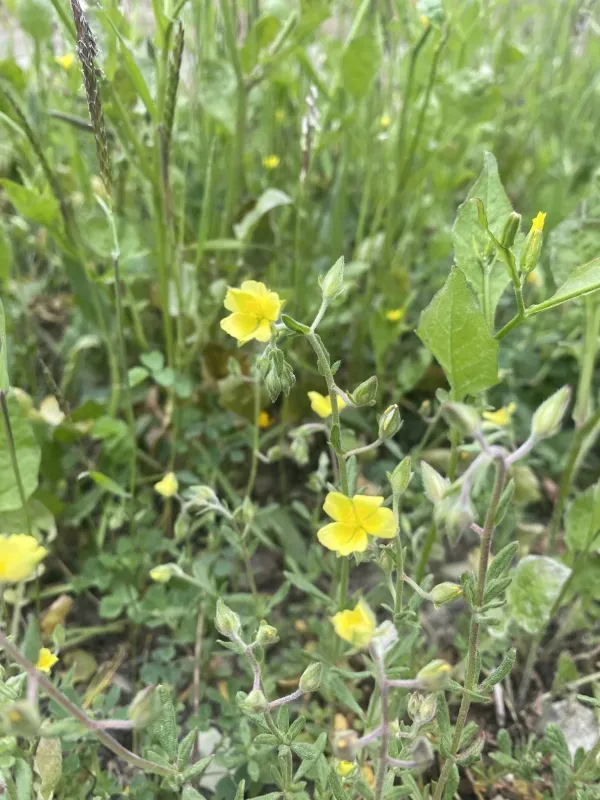
Description
Sowing dates
Willow-leaved rockrose, scientifically known as Helianthemum salicifolium, is an annual plant belonging to the Cistaceae family. Its life cycle is adapted to Mediterranean climates, where seeds germinate during the cool, moist season.
In cultivation, seeds should be sown in late autumn or early spring. The seeds are very small and require light for germination, so they must be sown shallowly on the surface or covered with a very thin layer of fine soil.
The sowing area must be well-drained and weed-free. Because the plant has a taproot, it does not respond well to transplanting; therefore, direct sowing into the final location is the recommended agricultural practice.
Spacing is critical for the development of individual plants. A density that allows airflow between plants helps to minimize the risk of fungal infections during the humid spring months.
For successful establishment, ensure the soil moisture remains consistent during the first few weeks. Once the plant reaches the rosette stage, it becomes highly drought-tolerant and requires minimal maintenance.
Growing requirements
This species thrives in poor, rocky, or sandy soils. It is particularly well-adapted to alkaline conditions and does not require high levels of nutrients to complete its lifecycle.
Drainage is the most important requirement for Helianthemum salicifolium. It will quickly decline in waterlogged conditions, as its roots are prone to oxygen deprivation if the soil remains wet for extended periods.
The plant is a strict heliophile, meaning it requires full sun exposure to flourish. It will not tolerate shading from taller vegetation, which limits its utility to open fields or rock garden environments.
Climate-wise, it is adapted to hot, dry summers. It can withstand high thermal loads, making it an excellent candidate for agricultural diversification in semi-arid and steppe regions.
While tolerant of low fertility, adding a small amount of potash or phosphorus can help support seed production. Nitrogen fertilizers should be used sparingly to avoid producing soft, succulent growth that is prone to pests.
Main diseases and pests
Root rot, primarily caused by species of Pythium or Phytophthora, is the primary threat to the crop. These pathogens proliferate in poorly drained soils and can wipe out an entire stand if moisture levels are not managed correctly.
Powdery mildew is a common foliage disease, especially when cool, humid nights follow hot, dry days. Proper plant spacing is the most effective preventative measure against this fungal pathogen.
Aphids can be significant pests during the active growing phase. They feed on the tender tips of the plants, causing stunting and potential transmission of viral diseases that affect the vitality of the crop.
Spider mites can become problematic during extreme heatwaves when the plant is under moisture stress. Regular monitoring for the fine webbing characteristic of mites is necessary during the peak of the summer.
Sanitation practices are vital. Removing infected plant tissue and ensuring the site is clear of debris at the end of the season significantly reduces the inoculum potential for subsequent crops.