
Helianthemum lippii
Helianthemum lippii
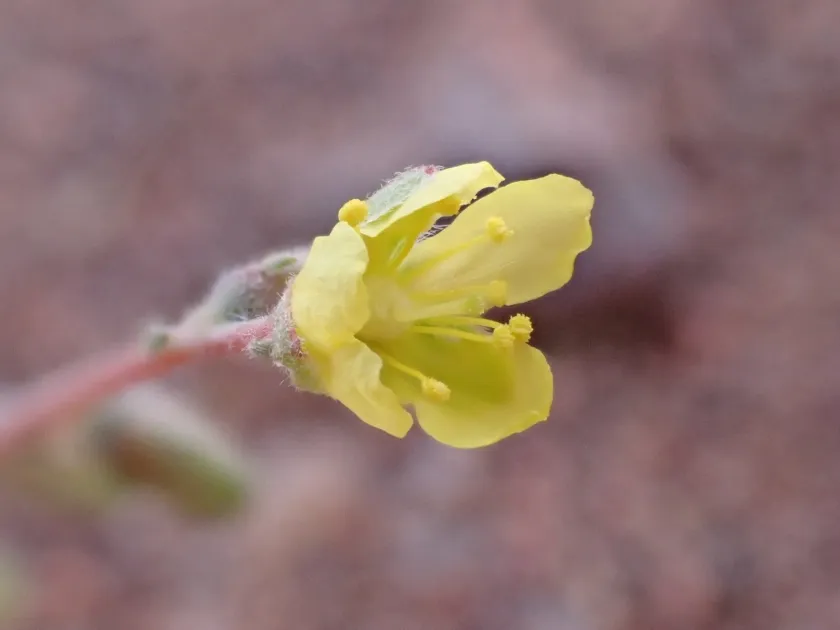
Description
Growing requirements
Helianthemum lippii is a low-growing subshrub belonging to the Cistaceae family. It is native to the arid and semi-arid regions of North Africa and the Middle East, where it has evolved to thrive in harsh environments.
The plant exhibits remarkable adaptation to water scarcity through its deep root system and specialized morphological traits. It typically thrives in poor, rocky, or sandy substrates, often showing tolerance to saline soil conditions.
Botanically, it is characterized by its small, dense, and pubescent leaves that play a crucial role in reducing water loss through transpiration. Its small, yellow flowers emerge during the favorable seasons, attracting local pollinators.
The cultivation of Helianthemum lippii requires high solar radiation and excellent drainage. It is highly intolerant of waterlogged soils, which makes it suitable only for regions with low annual rainfall and efficient soil permeability.
In agricultural practice, this species is valued as a forage resource for livestock such as goats and camels in desert regions. It also serves an ecological role in soil stabilization and preventing wind erosion in sensitive desert ecosystems.
Main diseases and pests
The primary threat to Helianthemum lippii in its native habitat is overgrazing by domestic livestock. Uncontrolled foraging prevents the plants from reaching maturity and limits the natural regeneration of the species.
When cultivated, the plant is susceptible to various root rot pathogens if the soil moisture level exceeds its biological threshold. Maintaining a dry, well-drained environment is essential for the longevity of the plantings.
Insect pests, particularly those adapted to desert shrubs, can cause localized damage to the foliage. Monitoring and integrated pest management are required when the plant is grown under intensive agricultural systems.
Environmental degradation and the encroachment of urban areas into natural arid habitats continue to reduce the presence of wild populations. Conservation of these areas is necessary for the long-term sustainability of the species.
Crop management should focus on limiting mechanical disturbance to the soil and implementing rotational grazing practices. By preserving the soil structure, the resilience of Helianthemum lippii against common threats is significantly improved.