
Helianthemum kahiricum
Helianthemum kahiricum
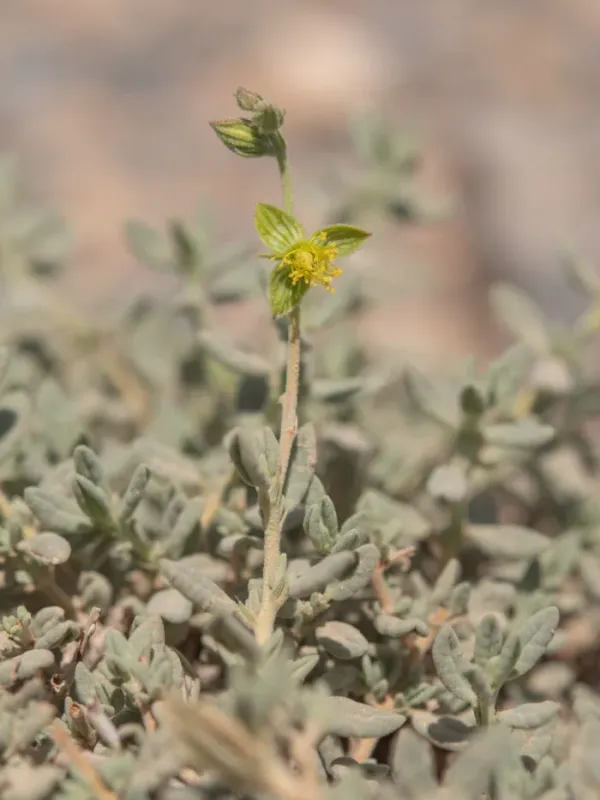
Description
Growing requirements
Helianthemum kahiricum is a perennial subshrub belonging to the Cistaceae family. It is a highly specialized plant that thrives in arid and hyper-arid environments, serving as a critical component of local ecosystems.
Native to North Africa and the Middle East, the species is perfectly adapted to desert climates. Its evolutionary traits allow it to withstand intense heat, high solar radiation, and prolonged periods of drought.
The plant demonstrates excellent performance in sandy, rocky, and alkaline soils. It is notably tolerant to soil salinity, making it an ideal candidate for reclaiming degraded lands in desert regions.
Its root system is characterized by deep vertical penetration, enabling the plant to access moisture reserves located well below the surface. This structural adaptation is the key to its survival in environments where rainfall is scarce.
Agricultural management for this species is minimal and primarily focuses on land conservation. It does not require high levels of chemical fertilizers, as it is evolved to grow in nutrient-poor desert substrates.
Main diseases and pests
The main threat to the sustainability of Helianthemum kahiricum populations is overgrazing by livestock. Excessive foraging prevents the plant from setting seeds and depletes the vegetative biomass necessary for regrowth.
Pathogen risks are relatively low, but root rot can become an issue if the plants are subjected to waterlogged conditions. Proper soil drainage is essential for maintaining the health of the root architecture.
Grasshoppers and other locust species represent the primary insect threats to the plant's foliage. These pests can rapidly defoliate populations, especially in years with favorable conditions for insect reproduction.
Effective management requires rotational grazing schedules to allow for vegetative recovery. Avoiding overstocking is the most efficient way to protect the plant from physical damage and subsequent susceptibility to secondary infections.
Monitoring for signs of moisture stress or pest infestation is recommended. Maintaining high levels of botanical diversity within the field will naturally mitigate the impact of specific pests or diseases.