
Sunrose
Helianthemum hybrids
Description
Growing requirements
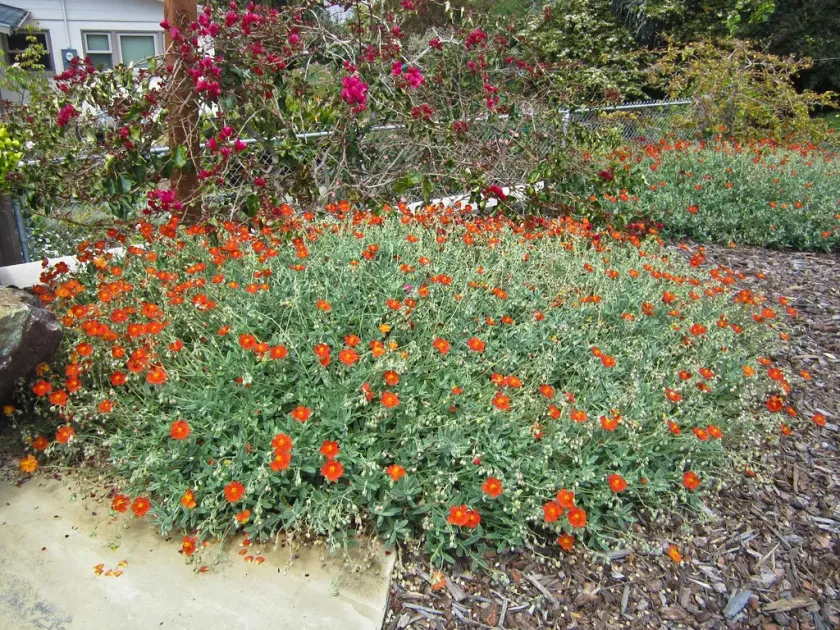
Helianthemum hybrids are popular perennial subshrubs belonging to the Cistaceae family. Known for their vibrant, bowl-shaped flowers, these plants form low, spreading mats that are exceptionally well-suited for rock gardens, stone walls, and dry borders.
The botanical structure of the plant is defined by woody stems that support narrow, lanceolate leaves, which may be evergreen depending on the climate. The hybrids offer a wide color palette, ranging from pure white and yellow to deep orange, red, and pink shades.
Requirements for the cultivation of sunrose involve full sun exposure and excellent drainage. These plants are true Mediterranean-type species, thriving in poor, stony soils that do not retain excess water, especially during the cold and wet winter months.
To ensure healthy growth, the soil pH should be neutral to slightly alkaline. Incorporating gravel or sharp sand into the planting hole is highly recommended to prevent waterlogging, which is the most frequent cause of root decay in these plants.
Maintenance involves cutting back the foliage by about one-third after the primary flowering period. This horticultural practice encourages a flush of new growth, prevents the plant from becoming woody and leggy, and promotes a more compact habit for the following season.
Main diseases and pests
Helianthemum hybrids are generally robust, but they can be susceptible to powdery mildew in environments with poor air circulation or high humidity. Symptoms include a whitish, floury coating on the leaves, which can be managed with organic fungicides.
Root rot is a critical threat that stems from waterlogged conditions. Once the roots become compromised, the plant often wilts rapidly and cannot be recovered, emphasizing the importance of site selection and soil preparation for long-term health.
Aphids are the primary insect pests that frequent the tender tips and buds of the plant. They can be manually removed or treated with insecticidal soap if the infestation is severe enough to hinder blooming or stunt vegetative growth.
Spider mites may affect the plants during prolonged periods of hot and dry weather. Keeping the plant hydrated and encouraging biodiversity in the garden can help manage these populations naturally, reducing the need for chemical intervention.
Slugs and snails may occasionally feed on young growth in spring. Using physical barriers or non-toxic traps can mitigate damage, ensuring the plants retain their aesthetic appeal throughout the growing season.