
Georgian Sunrose
Helianthemum georgicum
Description
Growing requirements
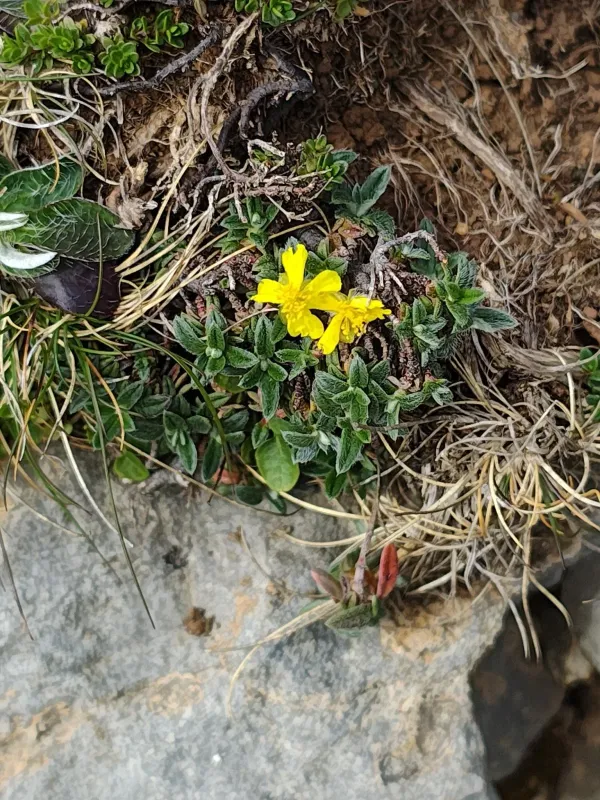
The Georgian Sunrose (Helianthemum georgicum) belongs to the Cistaceae family. This low-growing perennial subshrub is native to the rocky slopes of the Caucasus, where it thrives in harsh, dry environments.
The plant is highly heliophilic and requires a site with full sun exposure to maintain its compact shape and promote heavy blooming. Insufficient light leads to leggy growth and reduced flowering performance.
Soil requirements are strict regarding drainage. It grows best in sandy, stony, or calcareous soils that allow water to pass through quickly. It will not tolerate heavy, waterlogged clay, which causes root rot.
Cultural practices involve minimal watering once the plant is established. As a drought-tolerant species, it is well-adapted to arid conditions, making it an excellent choice for xeriscaping or rock gardens.
Helianthemum georgicum is primarily used as an ornamental groundcover. It is highly valued in landscape design for its ability to soften the edges of stone walls, fill gaps in paving, and add vibrant color to rockeries.
Main diseases and pests
The main threat to this species is poorly drained soil during winter months. Wet conditions around the roots almost invariably lead to fungal decay and the death of the plant.
Powdery mildew is a common issue when air circulation is restricted. Pruning back the plants after flowering ensures better airflow and keeps the foliage dry and healthy throughout the growing season.
Aphids can occasionally infest new growth during the spring. While they rarely kill the plant, they can distort the flower buds; insecticidal soap can be used to manage localized infestations.
Spider mites may appear during prolonged heatwaves, causing the foliage to look stippled or yellow. Increasing moisture around the roots during extreme heat can help the plant recover from stress.
Maintenance pruning is essential for plant longevity. Removing faded flowers and a portion of the current year's growth helps maintain the desired shape and stimulates denser branching for the following season.